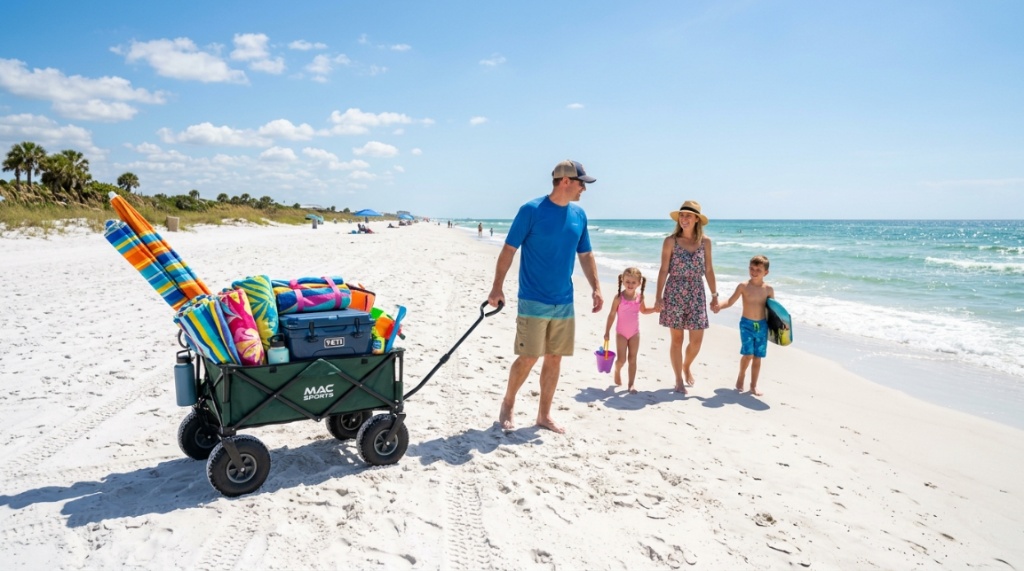
Dragging coolers, chairs, umbrellas, and beach bags across soft, scorching Florida sand is exhausting. By the time you set up your spot, you are already sweating through your shirt and ready for a nap instead of a swim. A portable beach wagon for florida solves this problem, but choosing the wrong one turns a convenience into a burden. Wheels that sink, frames that rust, and handles that strain your wrists are common frustrations. This guide breaks down exactly what to look for, what to avoid, and how to match a wagon to your specific beach habits, so your next trip starts with ease instead of effort.
Why Standard Wagons Fail on Florida Sand
Many people buy a generic utility wagon and assume it will work at the beach. It won’t. Florida sand is notoriously soft and deep, especially near the dunes and the tide line. Standard plastic wheels with narrow treads dig in immediately. You end up dragging a heavy cart through a trench you are creating with your own wheels. The frame also matters. Inexpensive steel frames corrode quickly in the salty, humid coastal air. A wagon that works fine for groceries or sports gear often becomes a rusted, stuck mess after a few beach trips. Understanding these failure points is the first step in making a smart purchase.
The Wheel Factor
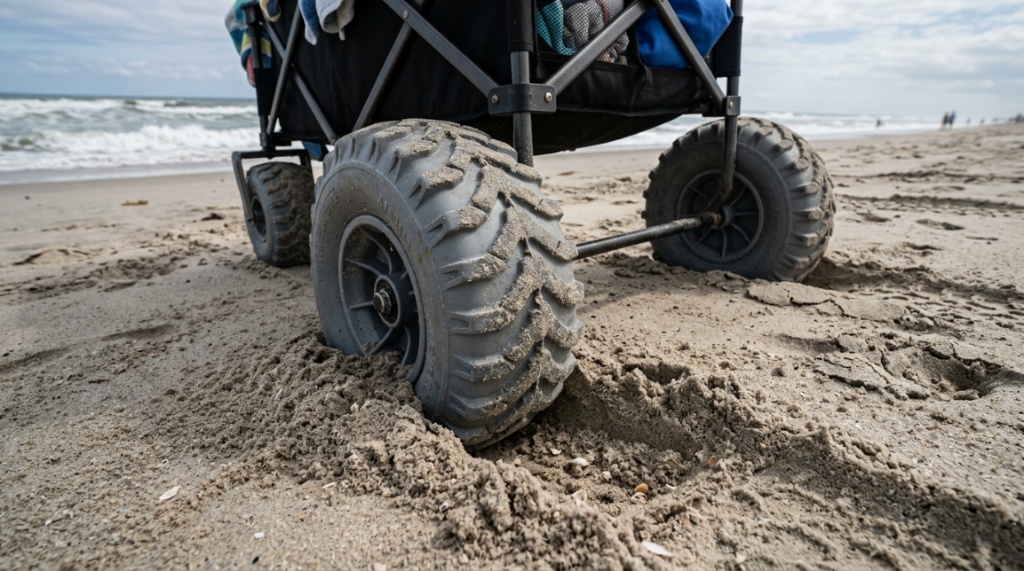
Wheels are the single most important feature. Look for wide, inflated tires with deep treads. These float over soft sand rather than cutting into it. Plastic wheels, even if they are wide, do not perform the same way. Air-filled tires provide better traction and a smoother ride over uneven terrain. Some premium models offer foam-filled tires that never go flat, which is a practical advantage for beach use since sand and salt can damage valve stems over time.
Frame Material and Rust Resistance
Aluminum frames are the best choice for Florida beaches. They are lightweight, which matters when you are lifting the wagon in and out of a car, and they do not rust. Steel frames are heavier and cheaper, but they will show rust spots quickly in a saltwater environment. If you do choose steel, look for a powder-coated finish, but understand that scratches will expose the metal to corrosion. The fabric on the wagon body also matters. Look for quick-dry mesh or polyester that resists mildew and does not hold sand.
What Size and Capacity Do You Actually Need?
Before you buy, think about what you carry. A solo beachgoer with a small chair and a backpack has different needs than a family of four with a canopy, multiple chairs, a cooler, and toys. Capacity is usually listed in pounds, but the physical dimensions of the cargo area matter just as much. A wagon that holds 150 pounds but has a shallow tub may not fit a large cooler. Measure your largest item, usually the cooler or the beach tent, and compare it to the wagon’s interior dimensions.
Single-Use vs. Family-Use Wagons
Compact wagons are easier to store and maneuver but often have smaller wheels and lower weight limits. They work fine for a quick trip to a sandbar or a beach with a short walk from the parking lot. Family-sized wagons are larger, heavier, and designed to haul serious gear. They typically have bigger wheels and a sturdier frame. The trade-off is weight and trunk space. Consider how far you walk from the car to the sand. If you regularly park far away, a larger wagon with better wheels is worth the extra bulk.
Key Features That Make a Beach Wagon Usable
Beyond wheels and frame, several features separate a good beach wagon from a frustrating one. Pay attention to the handle design, the folding mechanism, and the storage options. These details determine how easy the wagon is to use in real conditions, not just how it looks in a product photo.
Handle Design and Ergonomics
Most wagons have a pull handle, but the height and angle matter. A handle that is too low forces you to bend over, which strains your back. Look for an adjustable handle that extends to a comfortable height. Some models feature a push-pull handle that lets you steer from either side. This is useful on uneven sand where you need to change direction frequently. Also, check the grip material. Foam or rubber grips are more comfortable than bare metal or hard plastic.
Folding Mechanism and Storage
Beach wagons need to fold flat enough to fit in a car trunk. Some fold in half, while others collapse into a more compact shape. Check the folded dimensions against your vehicle’s trunk space. Also, consider how easy the folding mechanism is to operate. Some wagons require significant force or tricky alignment to fold and unfold. If you are doing this in a hot parking lot with kids waiting, you want something that works smoothly. A storage bag is a nice bonus, but it is not essential if the wagon locks securely in its folded position.
Brakes and Stability
This is an overlooked feature. On a sloped beach or a boat dock, a wagon without brakes can roll away. Look for a parking brake that locks at least one wheel. This is especially important if you are loading the wagon while it is parked on an incline. Stability also comes from the wheelbase. A wider wheelbase is less likely to tip over when you load heavy items on one side. Test the wagon’s balance by placing weight unevenly if you can before buying.
How to Choose Between a Wagon and a Beach Cart
Some people confuse beach wagons with beach carts. They serve similar purposes but have different designs. A beach cart typically has a single large wheel in the center and is pulled behind you like a wheelbarrow. It is excellent for very soft sand because the large wheel rolls over the surface easily. However, carts are less stable for wide loads and can be harder to balance. Wagons have four wheels and are more stable, but they perform poorly in deep sand unless they have the right tires. If you frequently visit beaches with long, soft sand stretches, a cart might be a better choice. If you need to haul a variety of gear and value stability, a wagon is the way to go, Planning a coastal getaway beyond the Sunshine State? Explore breathtaking coastal destinations with our guide to the Top 10 beaches in the world which is beautiful.
Common Mistakes to Avoid When Buying
Many buyers make the same errors, leading to disappointment and wasted money. Knowing these pitfalls helps you avoid them. The most common mistake is prioritizing price over wheel quality. A cheap wagon with bad wheels is useless on sand, no matter how good the frame is. Another mistake is ignoring the weight of the wagon itself. A heavy wagon is difficult to lift into an SUV, especially after a long day at the beach when you are tired. Also, do not assume that all-terrain wheels are the same. Some are designed for grass and gravel, not deep sand. Read the product description carefully to see if the wheels are specifically rated for sand use.
Practical Tips for Using Your Wagon on Florida Beaches
Once you have the right wagon, a few techniques make it even easier to use. First, inflate the tires to the recommended pressure before each trip. Soft tires make pulling harder and increase the risk of flats. Second, load the wagon with the heaviest items at the bottom and toward the front, near the handle. This shifts the center of gravity and makes pulling easier. Third, do not overload the wagon beyond its rated capacity. This strains the frame and makes the wheels sink deeper. Finally, rinse the wagon with fresh water after each beach trip. Salt and sand accelerate wear on the wheels, frame, and fabric. A quick rinse and dry extends the life of your wagon significantly.
For a detailed comparison of specific models that perform well in Florida conditions, check out this guide to the best portable beach wagon for florida. It covers popular options and highlights which features matter most for different types of beachgoers.
Budget Considerations and Long-Term Value
Beach wagons range from under $50 to over $300. The price difference reflects wheel quality, frame material, and overall build durability. A budget wagon might last a season or two with light use. A mid-range wagon with aluminum frame and pneumatic tires can last for years. If you go to the beach frequently, spending more upfront saves money in the long run because you will not have to replace a cheap wagon every year. Consider the warranty as well. A longer warranty often indicates the manufacturer’s confidence in the product’s durability.
Where to Buy
You can find beach wagons at big-box retailers, sporting goods stores, and online. Buying online gives you access to more models and customer reviews. However, if you can, visit a store to see the wagon in person. Check the wheel size, feel the handle height, and test the folding mechanism. This hands-on inspection helps you avoid buying a wagon that looks good in photos but feels flimsy in person. If you buy online, read reviews from other Florida residents specifically. Their experiences with sand and salt are more relevant than reviews from people in other climates.
Frequently Asked Questions
Can I use a regular utility wagon on the beach?
You can, but it will likely struggle. Most utility wagons have small plastic wheels that sink into soft sand. You will end up dragging the wagon, which is exhausting and can damage the frame. A wagon designed for beach use with wide pneumatic tires is a much better investment.
What is the best wheel size for a beach wagon?
Look for wheels that are at least 10 inches in diameter, preferably larger. The width of the tire matters more than the diameter. Wide tires distribute the weight over a larger surface area, preventing the wagon from sinking. Inflatable tires with deep treads are the best option for soft sand.
How do I clean a beach wagon after use?
Rinse the entire wagon with fresh water, paying special attention to the wheels and the undercarriage. Use a mild soap if there is salt buildup. Let it dry completely before folding and storing. This prevents rust and mildew and keeps the fabric from developing odors.
Are aluminum frame wagons worth the extra cost?
Yes, for Florida beaches, they are. Aluminum is lightweight and does not rust. Steel frames are heavier and will corrode in the salty air. The extra cost of aluminum is justified by the longer lifespan and easier handling, especially if you use the wagon regularly.
Can a beach wagon fit in a standard car trunk?
Most foldable wagons are designed to fit in a trunk, but you should check the folded dimensions. Some larger family models are bulky even when folded. Measure your trunk space and compare it to the wagon’s folded size before purchasing.
Conclusion
Choosing the right portable beach wagon for Florida beaches comes down to three things: wide pneumatic wheels, a rust-resistant frame, and a design that fits your gear and your vehicle. Avoid the temptation to buy the cheapest option, as it will likely fail in the sand. Focus on durability and usability. Rinse your wagon after every trip, keep the tires inflated, and load it properly. With the right wagon, you can turn a tiring trek across the sand into a quick, easy walk. Your beach day should start with relaxation, not a workout before you even lay down your towel.