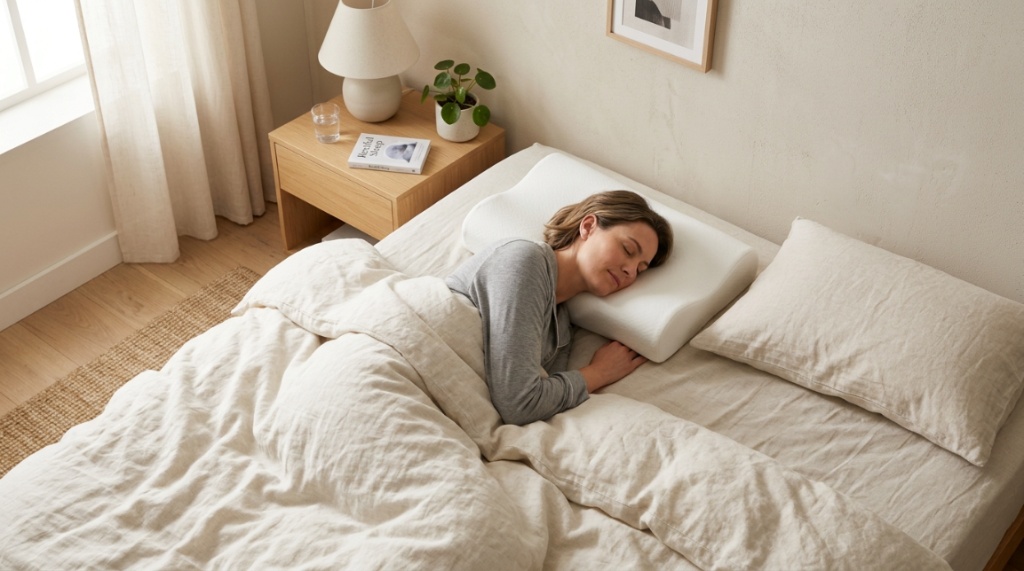
You know the feeling—you wake up exhausted, your throat feels raw, and your partner is giving you that look from across the bed. You’re not alone. Nearly 90 million Americans deal with snoring, and it’s straining relationships and stealing quality rest. The good news? The fix could be simpler than you think. This isn’t about expensive gadgets or invasive procedures. It’s about how you position your head, neck, and spine when you sleep. Choosing the right support can open your airway, reduce tissue vibration, and help you breathe easier all night long. Let’s break down what actually works and why the correct pillow might just save your sleep.
What Causes Snoring and How Does Pillow Choice Play a Role?
Snoring happens when air flows past relaxed tissues in your throat, causing them to vibrate. Pillow choice matters because it directly affects your head and neck alignment, which determines whether your airways stay open or collapse during sleep.
The Anatomy of Snoring: Why Your Airway Collapses
When you sleep, your tongue, soft palate, and throat muscles naturally relax. If you’re lying in a position that lets these tissues fall backward, your airway narrows. The result? Increased airflow velocity, turbulent breathing, and that telltale rattling sound. Your pillow’s height and firmness dictate whether your chin drops toward your chest (bad) or stays neutrally aligned with your spine (good).
Common Sleep Positions and Their Impact on Breathing
Back sleeping is the biggest culprit because gravity pulls your tongue and soft palate backward. Stomach sleeping strains your neck and can compress your airway. Side sleeping, particularly on your left side, is generally best for breathing. The right pillow encourages this position naturally while maintaining proper spinal alignment.
The Pillow-Snoring Connection: What Research Shows
Studies show that adjustable pillows with proper cervical support can significantly reduce snoring frequency and intensity. Research published in sleep medicine journals indicates that maintaining a neutral neck angle—neither tilted up nor down—reduces airway resistance and improves airflow by up to 30% in some cases.
What Features Should You Look for in an Anti-Snoring Pillow?
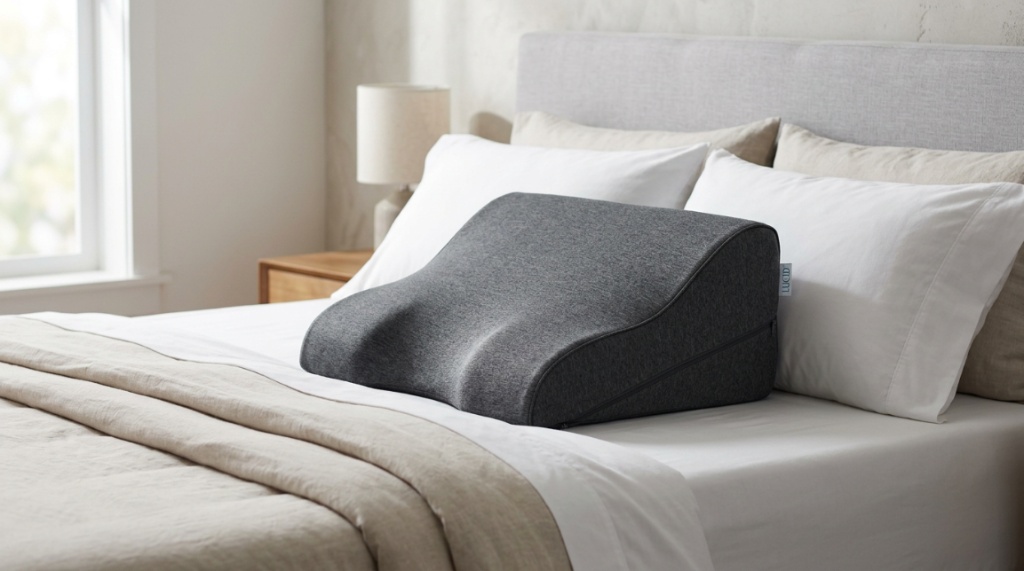
An effective anti-snoring pillow combines specific height, contour, and materials to keep your airway open throughout the night. The ideal choice depends on your sleep position and body type.
Adjustable Loft: The Key to Customizable Support
Loft refers to pillow height. A pillow that’s too high flexes your neck forward, pinching your airway. One that’s too low lets your head fall backward. Look for pillows with removable inserts or adjustable layers. This lets you fine-tune the height to your exact body proportions—something static pillows simply cannot offer.
Cervical Contour and Memory Foam: Supporting Natural Curves
Contoured pillows with a dip in the center cradle your head while supporting the natural curve of your neck. Memory foam excels here because it molds to your unique shape, distributing pressure evenly. This prevents the head from sinking too deeply, which can cause the chin to press against the chest.
Cooling Properties: Why Temperature Affects Snoring
Heat and humidity can cause throat tissue to swell, worsening snoring. Gel-infused memory foam and breathable covers with phase-change materials help regulate temperature. A cooler sleep environment reduces tissue congestion and keeps your airway as open as possible.
How Does Sleeping Position Interact with Anti-Snoring Pillow Design?
Your preferred sleeping position determines which pillow shape and height will work best for you. Matching the pillow to your position is essential for snoring relief.
Best Pillows for Back Sleepers Who Snore
Back sleepers need medium loft with a contour that gently tilts the chin upward. This positioning helps maintain airway patency. Look for a pillow with a cervical roll that supports the neck’s natural curve and a depression for the head. This combination prevents both chin-tucking and excessive head-lifting.
Optimal Pillow Shapes for Side Sleepers
Side sleepers typically need a higher loft—around 4 to 5 inches—to fill the space between the ear and the outside of the shoulder. A firmer pillow is often better to prevent the head from sinking. Some anti-snoring designs include cutouts or shoulder-friendly edges that reduce pressure on the neck and encourage staying on your side.
Transitioning from Back to Side Sleeping with Pillow Cues
Some advanced anti-snoring pillows have raised side sections and a lower center channel. This design makes back sleeping less comfortable, subtly nudging you to shift onto your side. It’s a gentle behavioral nudge that works with your body’s natural movement during sleep, If you are looking for a comprehensive sleep solution to elevate your upper body and keep your airways open, check out this detailed Review of Kingfun 4-Piece Orthopedic Wedge Pillow Set.
Which Pillow Materials Work Best for Reducing Snoring?
Material affects both support and comfort, influencing how well the pillow maintains proper alignment. Some materials are clearly superior for anti-snoring purposes.
Memory Foam vs. Latex: A Support Comparison
Memory foam offers exceptional contouring and pressure relief, making it a top choice. Latex provides similar support but with more bounce and breathability. Both excel at maintaining neck alignment. The choice comes down to personal preference for feel—memory foam hugs, while latex pushes back slightly.
Buckwheat and Natural Fillers: Pros and Cons
Buckwheat hulls are firm, supportive, and breathable. They respond to movement without memory foam’s sinking feeling. However, some find them too firm and noisy. They do keep the head elevated and aligned, which can benefit those prone to airway collapse, but the adjustment period can be significant.
Breathable Fabrics and Airflow Technology
Look for covers made from organic cotton, bamboo, or Tencel. These improve airflow, wick moisture, and reduce heat buildup. Some pillows feature perforated foam structures or ventilation channels that actively promote air circulation, keeping throat tissues cooler and less swollen during the night.
Can a Pillow Alone Cure Snoring or Sleep Apnea?
A pillow can significantly reduce snoring for many people, but it cannot cure severe sleep apnea or anatomical obstructions. Understanding the distinction prevents you from delaying critical medical treatment.
Positional Snoring vs. Structural Snoring
If you only snore when sleeping on your back, you likely have positional snoring—highly responsive to pillow therapy. If you snore in all positions, or if you have enlarged tonsils, a deviated septum, or nasal polyps, structural issues are at play. A pillow won’t fix these underlying problems.
When to Seek Medical Evaluation for Sleep Apnea
If you experience gasping for air, choking sounds, or excessive daytime fatigue, talk to your doctor about a sleep study. The American Academy of Sleep Medicine recommends evaluation when loud snoring accompanies witnessed breathing pauses. Untreated sleep apnea increases the risk of heart disease and stroke, so professional guidance is crucial.
Combining Pillow Therapy with Other Lifestyle Changes
For best results, pair your anti-snoring pillow with other proven strategies. Weight loss (even 10% reduction helps), avoiding alcohol before bed, and sleeping on your side dramatically improve outcomes. These complementary approaches work together to keep your airway open more effectively than any single method alone.
How Long Does It Take to See Results from an Anti-Snoring Pillow?
Many people notice a difference within the first night, but full adaptation typically takes one to two weeks. Results depend on your snoring severity, the pillow’s fit, and whether you’re actively adjusting your sleep habits.
The Adjustment Period: What to Expect
Your neck and shoulders need time to adapt to new support. Initially, some people experience mild stiffness or neck discomfort as muscles realign. This usually resolves within a few days. The key is consistency—if you alternate between your old pillow and the new one, results will be slower and less definitive.
Tracking Progress: Monitoring Snoring Reduction
Use a snoring app on your phone or a wearable sleep tracker to record baseline levels before starting with a new pillow. Review the data weekly. You should see a measurable decrease in snoring frequency and decibel level. Many users report the most significant changes after consistently using the pillow for ten consecutive nights.
When Results Are Minimal: Troubleshooting Tips
If after two weeks you see no change, re-evaluate the pillow’s loft. You may need a higher or lower profile. Consider whether your head is staying in the center of the contour or sliding off. Also, revisit your sleeping position—are you inadvertently rolling onto your back mid-sleep? Adjusting your routine can unlock the pillow’s full potential.
Which Anti-Snoring Pillow Types Are Easiest to Maintain?
Hygiene and longevity affect long-term satisfaction. Some pillow designs are significantly easier to care for than others, which influences whether you keep using them.
Washable Covers and Removable Inserts
Choose a pillow with a zippered, removable cover that you can toss in the washing machine. This makes it easy to keep allergens and dust mites at bay, which is important since allergies contribute to nasal congestion and snoring. Removable inserts allow you to wash the interior components separately.
Durability Expectations for Different Materials
Memory foam typically lasts 3 to 5 years without significant sagging. Latex can last even longer—up to 7 years. Buckwheat fillers can be topped up or replaced. Watch for signs of wear: loss of resilience, visible permanent indentations, or the pillow not returning to shape. These indicate it’s time for a replacement.
Stain Resistance and Hypoallergenic Properties
Many leading anti-snoring pillows now feature naturally hypoallergenic materials like bamboo or organic cotton. These resist dust mites and mold. Some come with certifications like GREENGUARD Gold, verifying low chemical emissions. This eco-conscious approach benefits both your health and the environment.
Is Spending More on a Premium Pillow Worth It for Snoring Relief?
Premium anti-snoring pillows often justify their higher price through superior materials, better adjustability, and longer lifespans. However, mid-range options can also be effective if they meet your core alignment needs.
Budget-Friendly vs. High-End: What’s the Real Difference?
Higher-priced pillows typically feature more advanced foam formulations, better cooling technology, and more intricate contouring. They’re often made in factories with more rigorous quality control. But you’re also paying for branding and marketing. Budget pillows can work, but they often lack adjustable loft heights—a crucial feature that limits their effectiveness.
Feature Comparison: Adjustability and Customization
The table below highlights how different price points usually correlate with the features that matter most for snoring:
| Feature | Budget Pillow | Mid-Range Pillow | Premium Pillow |
|---|---|---|---|
| Adjustable Loft | Often No | Sometimes | Yes |
| Cervical Contour | Rarely | Yes | Advanced |
| Cooling Technology | Minimal | Basic Gel | Phase-Change or Active Cooling |
| Warranty | 1 Year | 2–3 Years | 5+ Years |
| Lifespan | 1–2 Years | 2–4 Years | 3–7 Years |
Evaluating Value: Cost Per Night of Use
Consider cost-per-night rather than upfront price. A $150 pillow that lasts 5 years costs about 8 cents per night. A $40 pillow replaced annually costs 11 cents per night. Over time, the premium option is often the better value—especially when you factor in better sleep quality and potentially improved health.
How to Transition to a New Anti-Snoring Pillow Successfully
Switching pillows abruptly can disrupt your sleep. A gradual transition helps your body adapt without sacrificing rest during the adjustment period.
Week One: Introduction and Adaptation
Start by using the new pillow for just the first half of the night. If you wake up uncomfortable, switch back to your old pillow. This lets your neck muscles begin adapting without causing a sleepless night. Continue this for three or four nights.
Week Two: Full Commitment and Fine-Tuning
By the second week, you should be able to use the new pillow all night. Pay attention to how you feel in the morning. If you notice neck stiffness, adjust the padding level. If you’ve chosen an adjustable model, add or remove filler to fine-tune the height until you find the sweet spot that feels completely neutral.
Creating a Consistent Sleep Environment
Make sure your mattress isn’t undermining your new pillow. A sagging mattress alters your entire spinal alignment. Pair your pillow with a consistent bedtime routine, blackout curtains, and a cool room temperature (68°F is ideal). These factors enhance your pillow’s effectiveness and promote deeper, uninterrupted sleep.
Frequently Asked Questions
Do anti-snoring pillows really work?
Yes, for many people. They work by improving head and neck alignment, which opens the airway. They are most effective for those whose snoring is positional—that is, worse when sleeping on the back. Individual results vary based on snoring severity and the pillow’s fit.
What is the best type of pillow for back sleepers who snore?
A contoured memory foam pillow with an adjustable loft is ideal for back sleepers. Look for one with a cervical roll to support the neck curve and a head depression to prevent chin-tucking. This maintains an open airway without over-extending the neck.
How high should an anti-snoring pillow be?
The correct height depends on your sleeping position and body size. Side sleepers generally need a loft of 4-5 inches. Back sleepers typically need 3-4 inches. Stomach sleepers should use the thinnest option available. The goal is a straight line from your neck to your spine.
Can a pillow cure sleep apnea?
No, a pillow cannot cure sleep apnea, particularly obstructive sleep apnea (OSA). For mild cases of positional OSA, a specialized pillow may help reduce events, but it is not a medical treatment. CPAP therapy remains the gold standard, and you should consult a doctor for a proper diagnosis.
When should I replace my anti-snoring pillow?
Replace your pillow every 1 to 2 years, or sooner if it shows visible wear like lumps, permanent indentations, or if you wake up with neck pain. Even the best materials lose their supportive properties over time, reducing their anti-snoring effectiveness.
Are cooling pillows better for snoring?
Potentially, yes. Heat and moisture can cause throat tissues to swell, narrowing the airway and worsening snoring. A cooling pillow promotes a lower temperature environment, which can reduce congestion and provide stable support without retaining excessive body heat.
Can an anti-snoring pillow help with nasal congestion?
Indirectly, yes. By elevating the head slightly and keeping the neck aligned, these pillows can help reduce sinus pressure and post-nasal drip. Choosing a pillow with hypoallergenic materials also minimizes allergen exposure, which is a common cause of nighttime stuffiness.
Conclusion
Finding the right support can transform your nights and your mornings. The journey to quiet sleep isn’t about a miracle fix but about biomechanically sound positioning. An adjustable, contoured pillow that matches your sleep style is a foundational piece of the puzzle. Remember that your approach should be holistic—pair your new pillow with conscious sleep posture and healthy habits for the best results. Your partner will appreciate the silence, but you’ll feel the real difference in your energy, focus, and overall health. Evaluate your current pillow tonight and decide if it’s truly working for you. Make the change, give it time, and invest in the rest you deserve.