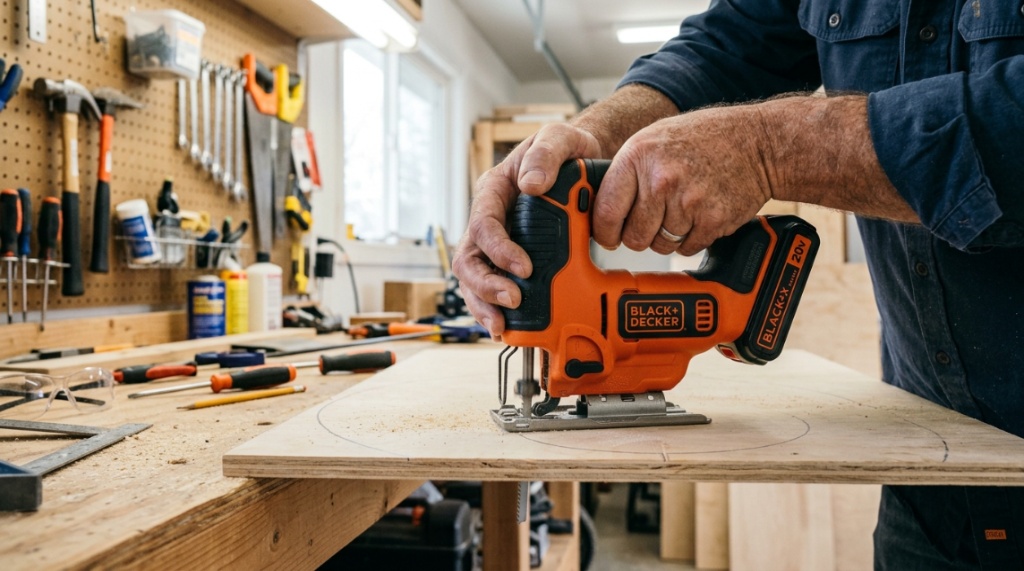
You need to make a cut that isn’t straight, and you need to make it now. Maybe you are hanging cabinets, trimming deck boards, or cutting a hole for an electrical outlet. The problem is that you do not have hundreds of dollars to drop on a tool you might use a few times a year. You need a cheap cordless jig saw that works—not a toy that binds up on the first cut. The good news is that the market has shifted. Budget-friendly cordless jigsaws have improved drastically in the last few years. The trick is knowing which features to prioritize and which ones you can ignore. This guide walks you through exactly what to look for so you can buy with confidence and cut without frustration.
What Makes a Cordless Jig Saw Actually “Work” for a Beginner?
A jigsaw “works” when it cuts the material you need cleanly, starts on the first trigger pull, and does not die halfway through the project. For beginners, this means finding a tool that balances power, battery life, and ease of use without the premium price tag.
Power Output Versus Price
Look for a motor rated between 4 and 6 amps (or the equivalent in brushless technology). Anything below 3.5 amps tends to struggle with hardwood and thicker materials. A brushless motor is ideal because it delivers more torque and longer run time without adding cost to the base unit. You can find brushless models in the budget range now, especially when buying a kit without the premium battery.
Orbital Action Explained Simply
Orbital action moves the blade forward and backward in addition to up and down. This clears sawdust faster and cuts quicker. A cheap jigsaw without orbital action is almost always a waste of money for anything beyond thin plywood. Ensure your budget model has at least three orbital settings. You use setting zero for metal and plastic, and higher settings for softwood and plywood.
Tool-Free Blade Change as a Non-Negotiable
If you have to grab a hex key every time you swap blades, you will stop using the saw. Every decent budget cordless jigsaw made today should offer tool-free blade change. This saves you five to ten minutes per project and keeps you focused on the cut.
Which Battery Platform Should You Invest In?
Your choice of battery platform determines how much you spend now and how much you spend later. If you already own power tools from a specific brand, your cheapest option is almost always sticking with that ecosystem.
Voltage Requirements for a Cordless Jigsaw
Stick with 18-volt or 20-volt max systems. 12-volt jigsaws are lightweight but lack the torque for cutting 2×4 lumber or hardwood. A 20-volt max battery from a reputable brand will give you 30 to 45 minutes of continuous cutting on a single charge, which is enough for most weekend projects.
Amp-Hour Ratings: What You Actually Need
A 2.0 Ah battery works for light cutting jobs like trim and thin plywood. For thicker lumber or metal, opt for a 4.0 Ah or 5.0 Ah pack. If you plan to cut for more than twenty minutes at a time, buy a second battery. You can find compatible aftermarket batteries for most major brands at a lower cost, but be cautious about quality control.
Should You Buy a Bare Tool or Kit?
Bare tools cost significantly less if you already own batteries. Kits are better value if you are starting fresh. Compare the cost of a kit versus buying a bare tool and a new battery separately. Often, a kit with a charger and two batteries adds only $20 to $30 more than the bare tool alone.
How to Check Blade Performance on a Budget Jigsaw
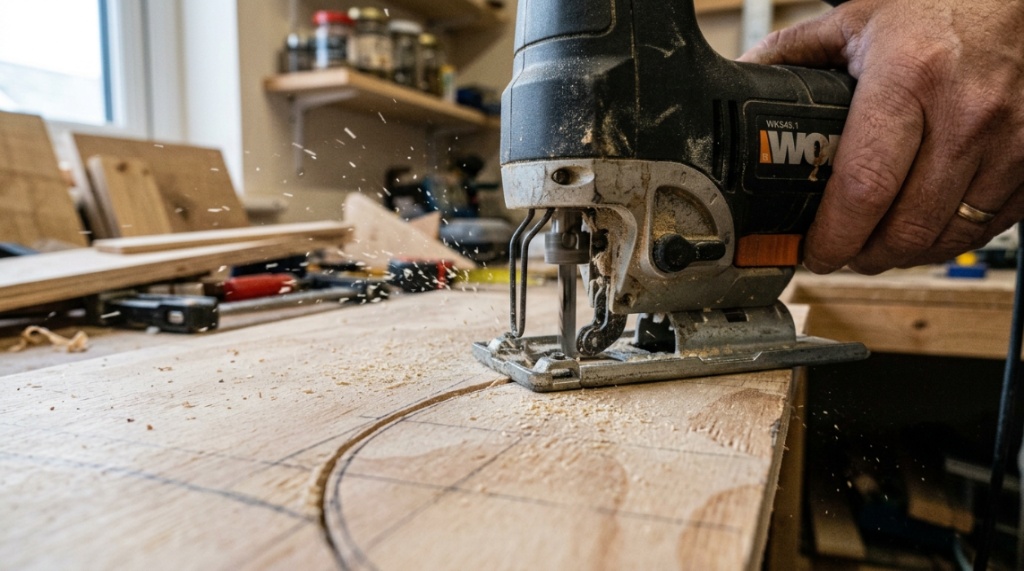
The blade is what actually cuts, so if the saw cannot hold a blade securely or vibrates excessively, the blade quality doesn’t matter. You need a saw that minimizes vibration and accepts standard T-shank blades.
T-Shank versus U-Shank Blades
Always choose a jigsaw that takes T-shank blades. They are the industry standard, widely available, and easier to change. U-shank blades are harder to find and usually indicate an older or lower-quality saw. Every budget model worth buying today uses T-shank.
Blade Clamping Mechanism Quality
Test the blade clamp before you buy. It should hold the blade firmly with zero wobble. A loose clamp causes the blade to wander, resulting in angled cuts and splintered edges. Look for a clamping system that uses a steel locking mechanism rather than plastic components.
Variable Speed Trigger for Material Control
A good jigsaw lets you control blade speed based on material. Use slow speed for metal and plastic to prevent melting. Use high speed for wood to cut quickly. A variable speed trigger is standard on most budget saws now, but ensure the trigger is smooth and responsive rather than jerky.
Why Vibration Control Matters More Than You Think
Vibration is the number one complaint among users of cheap jigsaws. Excessive vibration leads to inaccurate cuts, user fatigue, and poor results. It is not just a comfort issue—it directly impacts the quality of your work.
Tool Weight and Balance
A heavier saw tends to absorb more vibration, but it also tires your arm faster. Look for a saw that weighs between 4.5 and 5.5 pounds. Test the balance by holding it as if you were cutting. The weight should feel centered, not front-heavy.
Rubber Overmolding and Grip
Budget saws with soft rubber grips reduce vibration transmitted to your hand. Check that the grip covers the main handle and the top of the saw. Good grip reduces hand fatigue and helps you maintain control during long cuts.
LED Light and Dust Blower
An LED light helps you see the cut line, and a dust blower keeps debris off the line. Both features add minimal cost to the manufacturer but significantly improve cutting accuracy. If a budget model skips these, you will regret it the first time you cut in dim light, Once you’ve found the right budget tool for the job, you can put it to work on backyard DIY projects—such as building custom planter boxes if you are learning How to Start Gardening from scratch.
Can a Cheap Cordless Jigsaw Cut Thick Hardwood?
Yes, but with limitations. A cheap cordless jigsaw can cut through 1.5-inch thick hardwood like oak or maple if you use the right blade and technique. It will be slower than a corded model or a premium brushless saw, but it will get the job done.
Blade Selection for Hardwood
Use a blade with at least 10 teeth per inch (TPI) for hardwood. A coarser blade with 6 TPI will work but creates more tear-out. For thick hardwood, an 18-volt saw with a 4.0 Ah battery and a sharp carbide-tipped blade produces the best results.
Cutting Technique for Thick Materials
Let the saw do the work. Pushing forces the blade to bind and overheat. Use a slow, steady feed rate. Support the workpiece close to the cut line to prevent vibration. If the saw starts to bog down, release the trigger and let the blade spin up to speed before resuming.
Common Mistakes That Break Cheap Blades
Cutting too fast generates heat that dulls blades quickly. Cutting without proper support causes the material to pinch the blade. Always clamp your workpiece securely. A cheap jigsaw paired with good technique outperforms an expensive saw used poorly.
Which Features Can You Sacrifice on a Budget Model?
Not every feature is essential. Knowing what to skip saves you money without hurting performance. Focus on the core functions and ignore the extras that add cost without adding real value.
Sacrifice: Extra Speed Settings
You only need variable speed via the trigger. Six preset speed dials are unnecessary. A trigger with a smooth range from slow to fast is sufficient for all materials you will encounter.
Sacrifice: Premium Carrying Case
A hard plastic case is nice but adds $10 to $15 to the cost. A soft bag or no case saves money. Store your saw in a toolbox or on a shelf. The case does not improve the cutting performance.
Sacrifice: Brand Name Hype
Established brands like DeWalt and Milwaukee make excellent tools, but their budget models often offer less value than reputable off-brands. Brands like Ryobi, Bauer, and Hercules offer comparable performance at lower prices. Do not dismiss a saw just because it is not a “pro” brand,Finding a cheap cordless jig saw that works does not require luck—it requires knowing what matters.
How to Test a Cheap Cordless Jigsaw Before Buying
If you can physically handle the saw before purchasing, you can avoid common pitfalls. A few simple tests reveal whether a budget saw is worth your time and money.
The Squeeze Test
Hold the saw in your hand and squeeze the trigger. Listen for a smooth, consistent sound. A grinding or rattling noise indicates poor bearing quality. The trigger should feel firm, not loose or wobbly.
The Blade Insertion Test
Insert and remove a blade three times. The clamp should open fully and close securely. If the blade sticks or requires excessive force, the mechanism will fail quickly. A tool-free clamp that feels cheap now will break after a few blade changes.
The Balance Test
Place the saw flat on the shoe and check if it sits level. An uneven shoe prevents accurate bevel cuts. Also, tilt the shoe to 45 degrees to confirm the angle lock works properly. A common failure on budget saws is a loose bevel adjustment.
What Is the Real Cost of a Cheap Cordless Jigsaw?
The real cost is not just the purchase price. You must consider the cost of additional batteries, blades, and replacement parts. A very cheap saw might require you to buy proprietary blades that are hard to find.
Price Range for Decent Budget Models
Expect to pay between $40 and $80 for a cordless jigsaw that works reliably. Below $30, you are likely buying a toy that will fail within a few uses. Above $80, you enter mid-range territory with better build quality and longer battery life.
The Hidden Cost of Cheap Batteries
Saws sold with small 1.5 Ah batteries are cheaper but require frequent charging. A 1.5 Ah battery will drain in about 10 minutes of heavy cutting. Spending an extra $20 for a 4.0 Ah battery effectively cuts your total cost per minute of use.
Warranty and Support Considerations
Check the warranty length. One year is standard, but two years indicates better confidence. Avoid brands with no clear return policy. A cheap jigsaw that breaks after two months is not a cheap jigsaw—it is a waste of money.
Why Reading User Reviews Is Critical for Budget Tools
User reviews reveal real-world performance that specs cannot show. A saw might look great on paper but suffer from chronic issues like overheating or blade drift. Learn what to look for in reviews.
Focus on Verified Purchase Reviews
Ignore five-star reviews that say “great tool” with no detail. Look for reviews from people who have used the saw for at least three months. They will mention battery longevity, cutting accuracy, and common failures.
Watch for Pattern Complaints
If multiple users mention the same problem—such as the blade becoming loose during use or the battery contacts failing—take it seriously. A single negative review might be an outlier, but ten similar complaints indicate a design flaw.
Compare Reviews Across Platforms
Check reviews on two or three different sites. A saw with a 4.5-star rating on Amazon but a 3.0-star rating on a tool-specific forum suggests the manufacturer might be gaming the ratings.
How to Maintain a Cheap Cordless Jigsaw for Long Life
A budget saw will last longer with basic maintenance. Most failures occur because of neglect, not poor manufacturing. Simple habits keep your saw cutting straight for years.
Clean the Saw After Every Use
Dust accumulates in the blade clamp and the motor vents. Use compressed air to blow out debris. Pay special attention to the area around the blade holder. Sawdust mixed with moisture can cause rust and corrosion.
Lubricate the Blade Holder
Apply a drop of lightweight oil to the blade holder mechanism every ten blade changes. This prevents the locking mechanism from sticking. Use a non-conductive lubricant to avoid damaging electrical components.
Store Batteries Properly
Remove batteries from the saw when storing for more than a week. Keep batteries at room temperature. Extreme cold reduces battery capacity. Extreme heat damages the cells. A battery that dies early effectively makes your jigsaw worthless.
Frequently Asked Questions
Is a cheap cordless jigsaw good enough for cutting plywood?
Yes, a decent budget jigsaw cuts 3/4-inch plywood efficiently if you use a sharp blade and a steady feed rate. Look for a saw with orbital action for faster cuts and cleaner edges.
How long does a battery last on a budget cordless jigsaw?
A 20-volt 4.0 Ah battery provides 20 to 30 minutes of continuous cutting. Intermittent use for trim work and small projects will last a full weekend work session.
Can I cut metal with a cheap cordless jigsaw?
Yes, but you need a bi-metal blade with at least 18 TPI. Use slow speed and apply light pressure. Cutting thin metal sheets up to 1/8-inch thick is possible with a budget saw.
What is the best blade for a cheap cordless jigsaw?
Use T-shank blades from reputable brands like Bosch, Diablo, or Freud. These blades fit most budget saws and offer consistent quality. Avoid generic unbranded blades that dull quickly.
Should I buy a corded jigsaw instead of a cheap cordless one?
If you cut heavy materials daily, a corded jigsaw offers unlimited run time and consistent power. For weekend projects and portability, a cordless saw is more convenient. Choose based on your usage pattern.
Do I need a brushless motor on a budget jigsaw?
A brushless motor is a strong advantage because it delivers more power and longer battery life. Many budget models now include brushless motors. If you can afford the extra cost, it is worth the investment.
How do I prevent splintering when cutting with a cheap jigsaw?
Use a fine-tooth blade, apply painter’s tape over the cut line, and use a zero-clearance base plate. Cut with the good side facing down. Slow the blade speed near the end of the cut.
Conclusion
Focus on tool-free blade change, orbital action, and a solid 18 to 20-volt battery platform. Sacrifice unnecessary features like extra speed dials and premium cases. Test the saw for vibration and blade clamp quality before you buy. Read user reviews carefully to avoid common failures. With the right approach, you can spend under $80 and get a saw that handles plywood, hardwood, and even metal. Do not overthink the decision. Pick a model that fits your battery system, has a brushless motor if possible, and comes from a brand with decent warranty support. Your cuts will be straight, your arms will be less tired, and your wallet will thank you.