

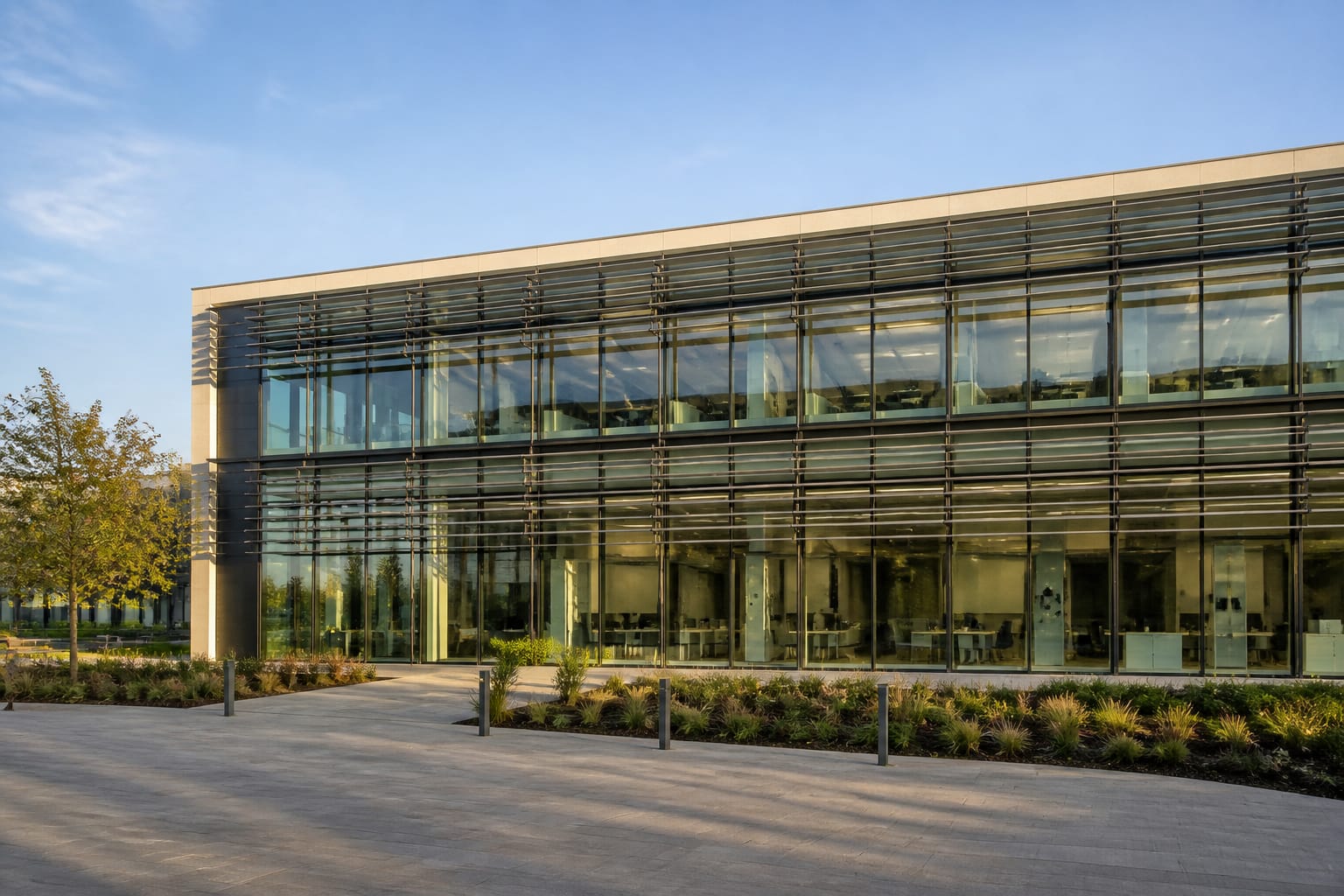
Preserving Natural Light with Brise Soleil
Brise Soleil can cut glare and reduce the amount of heat entering a building during summer months, however poor design can result in the need for artificial lighting throughout the year. By correctly designing the Brise Soleil to follow the sun’s path through the seasons and provide the correct amount of daylight into rooms, it can be a highly effective means of controlling solar gain and providing comfort within a building throughout the year.
Match Fin Direction to the Sun
South-facing elevations are generally best shaded with horizontal fins. However, east- and west-facing walls are better shaded with vertical fins. The orientation of the elevation must be considered before specifying a shading system, as fins of the wrong orientation can block too much useful light during the winter months or allow excessive heat to enter the building during summer months.
Choose Louvred Blades Over Fixed Ones
A Brise Soleil with fixed fins will block the same amount of light in July as it does in November. In order to maintain an appropriate level of daylight throughout the year, a Brise Soleil with louvred or adjustable blades is far better. These types of Brise Soleil can be opened up on overcast days and then closed on very sunny days in order to allow maximum daylight into the building. Motorised Brise Soleil can also be operated by a light sensor in order to open and close automatically, however a manually operated Brise Soleil with adjustable blades is much cheaper and offers a lot more flexibility than a fixed Brise Soleil.
Space the Fins Wider Apart to Create Diffused Light
If tightly packed fins create stripes of heavy shade then increasing the space between them and using a shallower aspect ratio will diffuse the light instead of blocking it. The reason that two buildings with apparently identical solar shading will look very different from within is that one will be allowing the light to bounce around within the room and the other will simply be casting further dark shadows.
Use Pale or Reflective Undersides
The bottom side of the fins also need consideration. Reflective or light coloured undersides can bounce light upwards within a room, whilst dark surfaces will absorb it. This is a minor point to consider and can be changed at the design stage; however it can make a large difference to the amount of light that is reflected to the back of a room.
Pair Shading with Light Shelves
Light shelves are very effective at reflecting light into the interior of a room. The light will bounce off the ceiling and give good distribution of light throughout the room. In order to get the most out of your Brise Soleil, high-level glazing above the light shelf can be incorporated into the design. This will allow maximum amount of daylight into the room, whilst the Brise Soleil can control glare and heat from entering the building at head height.
Check Winter and Summer Sun Angles
In winter the sun is lower in the sky than in summer so fins designed for summer shading will block useful winter light. So when choosing a brise soleil for your building it is worth checking both winter and summer sun angles for your building’s latitude and designing your fins accordingly. This is the sort of detail that is covered in architects’ guides to solar shading design for building in the UK.
Add Internal Blinds for Fine Control
Even with the best external solar shading, there will be times when additional control of glare is required. Internal blinds can provide the fine control of light needed on an hour by hour basis and are suitable for use in conjunction with fixed or louvred Brise Soleil to meet the thermal comfort standards for solar control as set out in building services standards for commercial buildings used in the UK.
Run a Daylight Check Before Fitting
A simple daylight factor check should also be run using the plan and elevation of a property before any finishing is added to check the amount of natural light that will penetrate to the areas of the room that need it. This can be a very cheap check against a potentially expensive error and is something that can be done using most building design packages. The Energy Saving Trust has some practical advice on how to get the best out of natural light in buildings and the relationship between the amount of glazing and the amount of shading required.
If the building is listed or within a conservation area, it’s worth checking the special conditions early on as these can often require separate consent for external solar shading and Historic England provides guidance on altering a listed building to include solar shading.
Get the design right of a Brise Soleil and it will cut out glare and heat in the summer yet still allow light in to the room in the winter.
