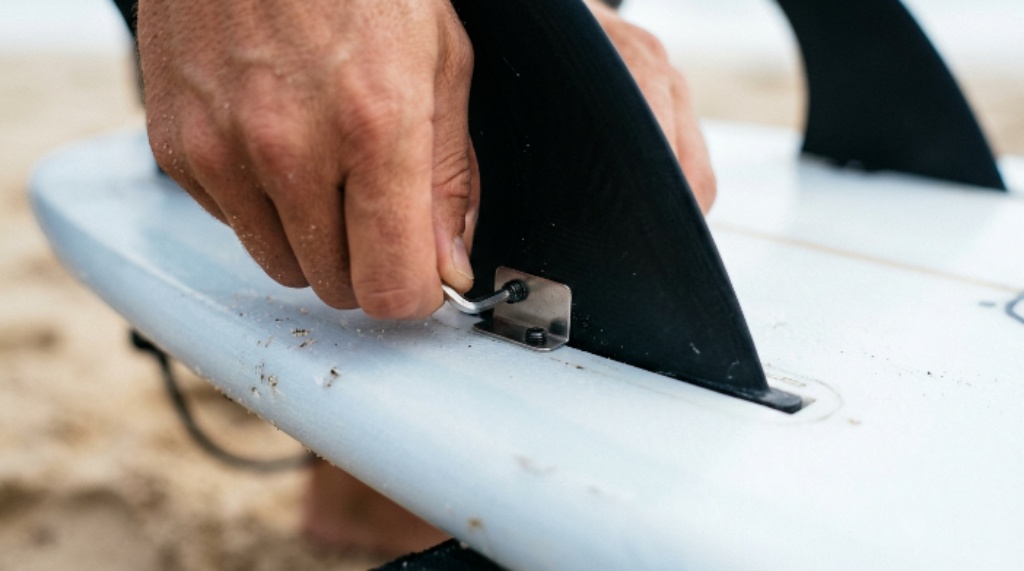
Surfing is all about control. The way your board responds to each wave depends on many factors, and your fin hardware plays a bigger role than most surfers realize. Old, worn, or mismatched hardware can cause fins to rattle, shift, or even detach mid-ride. That is not just frustrating — it is dangerous. However, upgrading your fin hardware is one of the easiest and most affordable ways to improve your performance in the water. This guide will walk you through everything you need to know, from understanding the components to making smart upgrades that last.
What Fin Hardware Actually Does
Before you upgrade anything, it helps to understand what fin hardware is and why it matters. Your fins attach to the board through a system of small but critical components. Each piece works together to hold your fins firmly in place while you surf.
The two most important components are fin plates and fin keys. Fin plates are the small metal or plastic tabs that sit inside the fin box and lock the fin into position. Fin keys are the tools used to tighten or loosen the screws that secure those plates. Without these two components working properly, your fins will not stay stable, no matter how good they are.
Additionally, the screws, washers, and the fin box itself all contribute to how securely your fins sit. Over time, saltwater corrodes metal parts, plastic tabs crack, and screws strip. Therefore, keeping this hardware in good shape is a fundamental part of surfboard maintenance.
Signs That Your Fin Hardware Needs an Upgrade
Many surfers wait too long to replace worn hardware. The signs are usually subtle at first, but they become more noticeable over time.
Here are the most common warning signs to watch for:
- Your fins feel loose or wobbly even after tightening the screws
- The screws no longer tighten properly and spin freely in place
- You notice cracks or chips in the fin plates
- The fin box shows visible corrosion or discoloration from saltwater
- Your fin key no longer grips the screw head cleanly
- You hear a faint rattling sound when your fins are supposedly locked in
If you notice any of these signs, do not wait. Loose fins reduce your control, slow your turns, and increase the risk of a fin detaching when you need it most. Therefore, an inspection before each surf session is always a good habit.
Understanding the Different Fin Box Systems
Not all surfboards use the same fin box system. Knowing which system your board uses is the first step before buying any replacement hardware.
The most popular systems include FCS, FCS II, and Futures. Each system has its own design, screw size, and plate style. FCS boxes use two small boxes per fin with individual screws and plates. FCS II uses a click-in system that does not require tools for most fins, though some still use screws for added security. Futures boxes use a single, longer box per fin with a single screw and plate.
However, there are also older or custom boards that use proprietary box systems. If your board falls into this category, take a photo of the hardware before heading to your local surf shop. This will help staff identify the correct replacement parts for your specific setup.
Choosing the Right Replacement Fin Plates
Fin plates come in different materials, and the material you choose affects both durability and performance. Standard plastic plates are the most common and the least expensive. They work well for casual surfers but can crack under repeated stress or after prolonged saltwater exposure.
Stainless steel plates are a significant step up. They resist corrosion, handle repeated tightening without stripping, and generally outlast plastic versions by a wide margin. Therefore, if you surf frequently, stainless steel plates are worth the extra cost.
Some brands also offer aluminum or reinforced composite plates. These are lightweight and strong, making them popular among performance surfers who want a combination of security and minimal added weight.
When replacing your fin plates, always match them to your specific fin box system. Using plates designed for a different system can damage the box and create an unreliable connection. Additionally, check that the screws included with the new plates match the threading of your existing fin box. A mismatch here will strip both the screw and the box, creating a much bigger problem.
Selecting the Best Fin Key for Your Setup
A fin key is a small tool, but the right one makes a real difference. Most standard fin keys are simple hex or Phillips head tools designed to fit the screws in your fin box. However, the quality of fin keys varies widely.
Cheap fin keys made from soft metal wear down quickly. After a few dozen uses, the head no longer grips the screw cleanly. This leads to stripped screws and a lot of frustration on the beach. A quality stainless steel fin key with a comfortable grip will last for years and give you reliable torque every time you tighten your fins.
Some surfers prefer t-bar style fin keys because they allow better leverage when tightening. Others prefer compact keys that fit easily in a boardbag pocket. Either style works well as long as the material is durable and the fit is precise.
Additionally, it is smart to keep a spare fin key in your car or boardbag. Losing your only fin key on a surf trip is a surprisingly common problem and one that is very easy to avoid with a little preparation.

Step-by-Step Guide to Replacing Your Fin Hardware
Replacing fin hardware is a straightforward process. You do not need special skills or professional tools. You just need the right parts and a few minutes of focused attention.
Start by removing your fins using your current fin key. Set the fins aside on a clean, dry surface. Next, use a small flathead screwdriver or the edge of your fin key to carefully lift out the old fin plates from the fin boxes. Some plates slide out easily, while others may require gentle prying.
Once the old plates are removed, inspect the fin boxes closely. Look for cracks, deep corrosion, or sand buildup. If the boxes are clean and intact, proceed with installing the new plates. Slide each plate into position, making sure it sits flat and flush inside the box.
Reinsert your fins and use your fin key to tighten the screws firmly. Do not overtighten, as this can crack plastic boxes or strip the threads. Tighten until you feel firm resistance, then stop. Finally, give each fin a firm wiggle test. There should be no movement at all. If a fin still feels loose, recheck the plate placement and retighten.
Surfboard Maintenance Beyond the Fin Box
Upgrading your fin hardware is a great starting point, but complete surfboard maintenance means looking after the whole board. Rinse your board with fresh water after every session. Saltwater accelerates corrosion on all metal parts, including fin hardware, leash plugs, and vent screws.
Store your board out of direct sunlight when not in use. UV exposure degrades foam, resin, and plastic components over time. A quality board bag offers both UV protection and physical cushioning during transport.
Additionally, inspect the entire board for dings, cracks, or delamination before each session. Water entering through a ding can travel through the foam core and weaken the structure of your board from the inside. Small repairs done early are always easier and cheaper than major repairs done late.
When to Seek Professional Help
Most fin hardware upgrades are simple enough to handle yourself. However, some situations call for a professional repair. If your fin box is cracked, fully delaminated, or moving within the board, do not try to fix it yourself with tape or glue. A damaged fin box needs proper repair using the right resins and techniques.
Local surf shops and ding repair specialists can usually fix or replace a fin box in a day or two. The cost is modest compared to the risk of surfing with compromised hardware. Therefore, when in doubt, get a professional opinion before heading back out.
Conclusion
Upgrading your surfboard fin hardware is one of the most practical improvements you can make as a surfer. The process is simple, affordable, and delivers a noticeable improvement in stability and control. Start by identifying your fin box system, then replace worn fin plates with high-quality stainless steel versions. Invest in a reliable fin key and keep a spare on hand. Make fin hardware checks a regular part of your surfboard maintenance routine, and always address small issues before they become big ones.
Good hardware gives your fins the solid foundation they need to perform at their best. Whether you are a beginner learning to read waves or an experienced surfer chasing performance, stable fins built on quality hardware make every session better.
Frequently Asked Questions
How often should I replace my fin plates?
There is no fixed schedule, but a visual inspection every three to six months is a good practice. Replace fin plates immediately if you notice cracking, warping, or corrosion. Stainless steel plates generally last much longer than plastic ones under regular saltwater exposure.
Can I use any fin key on my fin box screws?
Not always. Different fin box systems use different screw sizes and head types. Always match your fin key to the specific system on your board. Using the wrong key can strip the screw head, making future adjustments very difficult.
What is the difference between fin plates and fin screws?
Fin plates are the flat tabs that hold the fin base in place inside the fin box. Fin screws pass through the fin and the plate to lock everything together. Both components work as a pair and should be replaced together when either one shows signs of wear.
Is it safe to surf with a slightly loose fin?
No. Even a small amount of fin movement reduces your control and puts extra stress on the fin box. Over time, a loose fin can damage the box itself. Always fix loose fins before entering the water.
Do all surfboard brands use the same fin hardware?
No. The three most common systems — FCS, FCS II, and Futures — use different hardware that is not interchangeable. Always identify your board’s fin system before purchasing replacement plates or screws to ensure a proper fit.
Related Topics:
Essential Skateboard Maneuvers Every Skater Should Master