You’ve just driven up from the gear shop, or maybe you’ve been scrolling through listings for hours, and one question keeps bubbling up: Will this board actually keep me upright on the water? Washington’s waters—from the chop of Puget Sound to the glassy stillness of Lake Chelan—demand a board that prioritizes stability above almost everything else. The problem is that most inflatable paddle boards marketed as “stable” simply aren’t built for the unique conditions found in the Pacific Northwest. Finding a truly stable inflatable SUP Washington paddlers trust means looking past the flashy graphics and focusing on core engineering details like thickness, width, and rail design. This guide cuts through the marketing noise to give you actionable buying criteria that match the specific demands of Washington waterways, ensuring your investment keeps you confident and dry.
What Defines a Truly Stable Inflatable SUP for Washington Waters?
Understanding the Physics of Stability
Stability on an inflatable SUP comes down to primary stability (feeling solid while standing still) and secondary stability (resistance to tipping when the board tilts). In Washington, where wind shifts and boat wakes are common, you need a board that excels at both. Look for a width of at least 32 inches for recreational paddling and 34 inches for fishing or yoga. Thickness matters too—6-inch thick boards are the standard, but 6-inch boards with a dropped-stitch core provide better rigidity without adding excessive weight.
Why Washington Conditions Are Unique
The Pacific Northwest presents a mixed bag of conditions. Inland lakes like Lake Washington can turn choppy within minutes due to afternoon winds. Coastal paddling around the San Juan Islands involves tidal currents and occasional swell. A stable board must handle these variables without becoming a workout just to stay upright. Boards with a pointed nose (displacement hull) cut through chop better than rounded noses, but they sacrifice some primary stability. For most Washington paddlers, a hybrid shape—rounded nose with a slightly pointed entry—strikes the best balance.
Rigidity: The Hidden Stability Factor
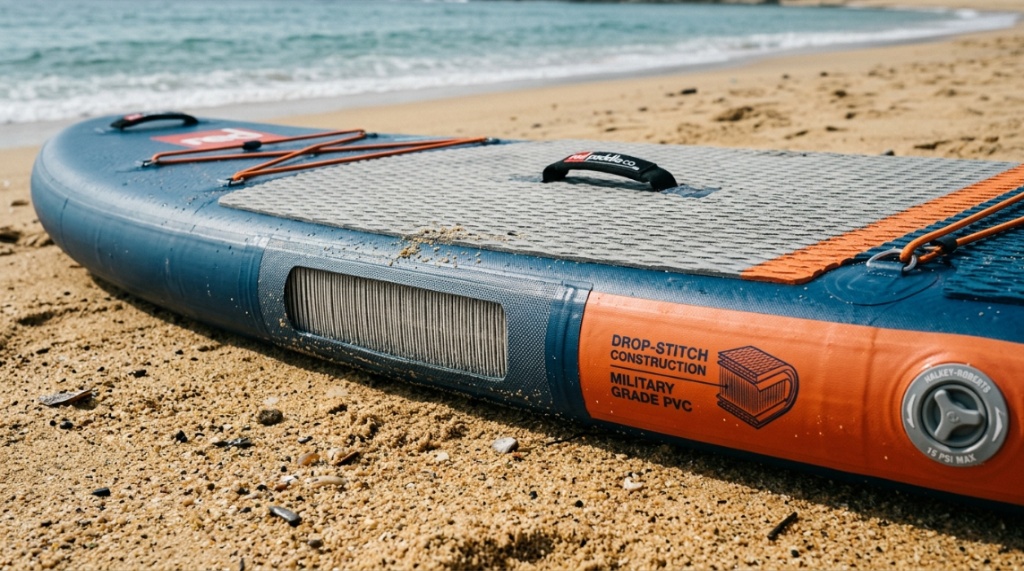
A board that wobbles underfoot feels unstable even if it is wide. Inflatable boards rely on internal drop-stitch technology and inflation pressure to remain rigid. Washington paddlers should target a board rated for 15–18 PSI. Boards with woven drop-stitch or double-layer construction hold shape better in colder water, where the air inside the board contracts slightly. Always check the manufacturer’s recommended PSI range and invest in a high-pressure pump with a gauge.
Why Board Width Matters More Than Length for Stability
The Width-to-Stability Ratio Explained
Width is the single most important factor for stability on an iSUP. Every additional inch of width adds noticeable stability, especially for beginners or larger paddlers. For Washington conditions, 32 inches is the absolute minimum for a stable feeling. For anyone over 180 pounds or those planning to bring gear (fishing rod, cooler, camera), 34 inches or wider is recommended. Width also affects speed—wider boards are slower but far more stable.
How Width Affects Tracking and Turning
Wider boards resist turning, which can be a challenge in tight coves or rivers. However, in open Washington waters like the Columbia River or Puget Sound, straight-line tracking is more important than quick maneuverability. A board that is 34 inches wide with a longer waterline (11–12 feet) glides efficiently while remaining stable. If you plan to paddle on narrow rivers like the Snoqualmie, a slightly narrower board around 31 inches may be acceptable, but only if you have existing balance skills.
Measuring True Width vs. Listed Width
Some manufacturers list the maximum width at the midpoint of the board, but the width at the standing area may be narrower due to tapering. Look for boards that maintain width for at least 60 percent of their length. Brands that publish detailed dimension diagrams or offer 3D renderings are usually more transparent. When in doubt, opt for a board that lists its width at multiple points, not just the maximum.
Which Board Shapes Handle Washington Chop Best?
Displacement Hulls vs. Planing Hulls
Displacement hulls, with their pointed nose and V-shaped underside, cut through waves and chop more cleanly than planing hulls. Planing hulls, which have rounded noses and flat bottoms, are more stable in calm water but slap against chop. For Washington’s wind-affected lakes and coastal paddling, a displacement hull or hybrid design is the better choice. However, displacement hulls can feel tippy when the board is stationary, so prioritize width to compensate.
Rocker Profile Considerations
Rocker refers to the curve from nose to tail. A board with more rocker (more curve) handles rough water better because the nose rides over waves rather than plowing through them. Less rocker is faster on flat water but increases the chance of nose-diving in chop. For Washington, a moderate rocker—noticeable curve at the nose, flattening toward the tail—offers the best compromise. This design allows you to paddle efficiently on calm days while managing sudden wind chop.
The Role of Rail Design
Rails (the edges of the board) influence how water releases from the sides. Sharp rails provide more bite in turns but can catch in side chop, causing instability. Rounded rails are more forgiving and release water smoothly, making them ideal for choppy conditions. Inflatable boards naturally have softer rails than hard boards, but some models use reinforced edge strips to create a sharper profile. For stability in Washington, look for boards with rounded or moderate rails rather than sharp ones.
How to Test Stability Before Buying
Dry Land Testing: Weight Distribution and Balance
Before taking a board on the water, you can test its stability on land. Place the board on a flat, soft surface like grass. Stand on it with feet shoulder-width apart and shift your weight side to side. A board that feels overly wobbly or tilts dramatically with small movements will be unstable on water. Pay attention to how the board responds to weight shifts—a good board will have a predictable, controlled feel.
Pressure Test for Rigidity
Inflate the board to the recommended PSI and press down firmly in the center with your hand. The board should feel as firm as a trampoline, not a balloon. If you can easily depress the surface more than an inch, the board will feel soft and unstable underfoot. This is especially important in Washington’s cooler temperatures, where air contracts and reduces effective PSI.
Simulated Water Conditions
Some shops or demo events allow you to test boards in a pool or calm bay. If possible, ask to paddle the board in a small controlled area first. Focus on how the board feels when you quickly shift your weight from your heels to your toes. This simulates the motion of paddling in side chop. A stable board should resist tipping and return to level quickly after weight shifts.
What Accessories Improve Stability on the Water?
Stability Fins and Their Placement
The fin system on an iSUP significantly affects tracking and stability. A setup with a large center fin plus two smaller side fins (thruster configuration) provides the best stability for Washington conditions. The center fin keeps the board tracking straight, reducing the wobble caused by constant steering corrections. Removable fins are preferable because you can swap to a smaller fin for shallow rivers or a larger fin for open water.
Deck Pad Grip and Thickness
A thick, textured EVA foam deck pad provides traction and cushioning, reducing foot fatigue and improving perceived stability. Look for a pad that covers at least 60–70 percent of the board’s length. Diamond-groove patterns offer the best grip, even when wet. Thinner pads (under 4mm) can feel slippery and reduce stability confidence. Some boards also feature pad extensions near the tail, which help with pivot turns and balance when maneuvering in tight spots.
Knee Pads and Cargo Areas
If you plan to kneel or sit during long paddles, look for boards with integrated knee pads or at least a padded area near the center. Cargo bungee systems should be located away from the standing area to prevent clutter underfoot. A neat deck reduces tripping hazards and helps you maintain your balance when reaching for dry bags or water bottles.
Can a Shorter Board Be Stable Enough for Washington Paddling?
Short Board Advantages for Rivers and Coves
Shorter boards (8–10 feet) are lighter and easier to maneuver, making them appealing for river paddling, small coves, or surfing waves. They are highly portable and fit in small car trunks. However, their stability depends heavily on width and rocker. A 9-foot board with 34 inches width can be very stable, while a 10-foot board with 30 inches width may feel twitchy.
Trade-offs for Open Water Use
For larger Washington lakes and the Sound, shorter boards struggle with tracking and glide. You will need to paddle more frequently to maintain speed, leading to fatigue. Short boards also tend to yaw (wander side to side) in crosswinds, requiring constant correction. If you primarily paddle open water, stick to boards 11–12 feet long. Reserve short boards for rivers, waves, or times when portability outweighs stability needs.
When Shorter Works in Washington
Shorter boards excel in sheltered areas like Lake Union, Portage Bay, or the calm inlets of the San Juans. They are also popular for SUP yoga or fitness classes where quick adjustments and agility matter. If you choose a short board for Washington, ensure it is at least 34 inches wide and has a displacement nose for chop management. Many manufacturers now offer “compact” models designed specifically for stability in variable conditions.
How to Choose the Right Inflation Pressure for Maximum Stability
The PSI Sweet Spot for Washington Water Temps
Cold water reduces the air pressure inside your board because air contracts when cooled. In Washington, where water temperatures range from the mid-40s in winter to high 60s in summer, you may need to adjust your PSI seasonally. For winter paddling, inflate to the maximum recommended PSI (usually 15–18 PSI) to compensate for contraction. In summer, you can run slightly lower (2–3 PSI below max) for a softer ride without sacrificing stability.
How to Measure and Adjust PSI on the Go
Use a digital pressure gauge for accuracy rather than relying on the pump’s built-in gauge, which can be off by 2–3 PSI. After inflating, let the board sit for 5 minutes to allow the air to stabilize, then check again. During long paddles, the sun can heat the board and increase pressure. If the board feels rock-hard and bouncy, release a small amount of air to maintain comfort and stability. A board that is too hard can become unstable in chop because it loses its ability to conform slightly to waves.
Signs Your Board Is Under-Inflated
If the board feels spongy, wobbles when you step on it, or makes a drum-like sound when tapped, it is under-inflated. Under-inflation is the most common cause of poor stability on iSUPs. A properly inflated board should feel like a solid platform. If you notice the board flexing excessively in the middle when you paddle, stop and add air. In Washington’s cool waters, under-inflation can also lead to delamination over time as the board flexes more than designed.
What Features Make a Board Ideal for Washington’s Lakes and Rivers?
Recommended Length and Thickness Options
For Washington lakes and rivers, a board length of 11–12 feet with a thickness of 6 inches is the gold standard. This combination provides enough volume for larger paddlers (up to 250 pounds) while maintaining the glide needed for covering distance. For rivers with tighter turns, a 10.5-foot board with the same thickness works well. Avoid boards thinner than 6 inches—they lack the rigidity and volume for stable paddling in anything other than perfect conditions.
Material Quality and Stitching Standards
Look for boards made with military-grade PVC fabric and double-layer fusion lamination. The drop-stitch should be woven, not knitted, for maximum rigidity. Check the stitching pattern inside the board—boards with a higher density of drop-stitch threads (over 5,000 per square inch) resist flex and maintain shape under pressure. Boards with UV-resistant coatings are beneficial for Washington’s intense summer sun, which can degrade lesser materials over time.
Weight Capacity and User Safety
Every iSUP has a maximum weight capacity, but stability decreases as you approach that limit. For stable paddling, stay at or below 80 percent of the listed capacity. If you weigh 200 pounds and plan to bring 30 pounds of gear, choose a board rated for at least 280 pounds. Boards with higher volume (measured in liters) generally offer better stability for heavier loads. Many Washington paddlers fishing from iSUPs need high-capacity boards (400+ liters) to accommodate gear and movement.
How to Transport and Store Your Stable iSUP in Washington
Vehicle Transport Solutions for Large Boards
Wider boards (34+ inches) can be challenging to fit in smaller cars. Use roof racks with wide straps or invest in a board-specific bag that distributes weight evenly. For SUVs and trucks, place the board diagonally in the bed or use a specialized inflatable board rack that cradles the board without pressure points. Always deflate transport straps slightly when driving over rough roads to prevent the board from shifting.
Storage Considerations for Humid Environments
Washington’s damp climate requires careful storage to prevent mold and material degradation. Always dry the board completely before rolling it up. Store it in a cool, dry place away from direct sunlight and extreme temperature fluctuations. Avoid storing the board in a damp basement or garage without ventilation. Use a board bag with silica gel packets to absorb residual moisture. Periodically inspect the valve area for corrosion, especially if you paddle in saltwater.
Repair and Maintenance Tips for Saltwater Paddling
If you paddle in Puget Sound or the Pacific coast, rinse your board with fresh water after every session. Salt crystals can damage the PVC layer and valve seal over time. Check the fin boxes and leash attachment points for sand buildup. Apply a thin layer of silicone lubricant to the valve threads every few months to maintain a good seal. Promptly repair any small punctures with PVC patch kits before they grow.
Where to Find Trustworthy Reviews for Stable iSUPs in Washington
Local Paddling Groups and Forums
Washington has active paddling communities on Facebook, Reddit (r/SeattleSUP and r/InflatablePaddleboard), and local meetup groups. These communities provide real-world insights from paddlers who use their boards in local conditions. Ask specific questions about stability in the Sound or on Lake Washington. Locals often share experiences with specific brands and models that work well in our unique environment.
Reputable Online Sources and Demo Programs
Several Washington-based retailers and rental shops offer demo programs where you can test boards for a day before purchasing. This hands-on approach is the best way to assess stability in real conditions. Online sources like the guide to stable inflatable SUP Washington options provide curated recommendations based on local testing. Look for reviews that mention specific lakes, rivers, and wind conditions, not just generic praise.
What to Look for in a Verified Buyer Review
Focus on reviews that describe the reviewer’s height, weight, and primary paddling location. A review from a 150-pound paddler in Florida may not apply to a 220-pound paddler in Washington’s chop. Look for patterns across multiple reviews—if several people mention stability issues in choppy water, take note. Also, check return policies and warranty terms, as they indicate the manufacturer’s confidence in their board’s performance.
How Do Budget and Premium iSUPs Compare for Stability?
Budget Boards (<$700): Stability Trade-offs
Lower-priced iSUPs often use thinner PVC (less than 0.9mm) and synthetic drop-stitch, resulting in less rigidity. They tend to be narrower (30–31 inches) and less stable in Washington conditions. However, some budget models designed specifically for stability (34 inches wide, 6 inches thick) can perform adequately on calm lakes. Expect to trade off some durability and tracking performance. These boards are fine for occasional use on flat days but may struggle in chop or wind.
Mid-Range Boards ($700–$1,200): The Sweet Spot
Mid-range boards generally feature better materials (1mm PVC, woven drop-stitch) and thoughtful design for stability. Many in this range are 32–34 inches wide and 6 inches thick, with proper rocker profiles for chop. They offer the best value for Washington paddlers who want reliable stability without the premium price tag. Brands like NRS, SereneLife, and Tower offer models that perform well in our conditions.
Premium Boards ($1,200+): Maximum Performance
Premium iSUPs use marine-grade PVC, advanced drop-stitch technology, and often include features like carbon rails or reinforced standing areas. They provide the highest rigidity and best stability in challenging conditions. Boards from Starboard, Red Paddle Co, and Badfish are popular among Washington enthusiasts. For regular paddling in Puget Sound or the San Juans, the investment is worthwhile for the improved stability and longevity.
How to Read Washington Water Conditions for Safer Paddling
Wind Forecasting for Stability Planning
Washington’s wind patterns can change rapidly. Before heading out, check marine forecasts from the National Weather Service or use apps like Windy or PredictWind. Winds over 10 knots create significant chop that tests stability, especially on lakes like Lake Chelan or Lake Washington. Plan morning paddles when winds are typically calmer. If wind picks up, head toward shore or a protected cove. Your board’s stability in chop depends as much on your paddling technique as on the board itself,After returning from your paddling trip, keep your gear secure and organized by choosing the right storage solution when you select best freestanding surfboard racks for your home.
Tidal Currents and Their Effect on Board Stability
In saltwater areas like the Sound or the Strait of Juan de Fuca, tidal currents can reach 3–5 knots, creating standing waves and eddies. These currents require constant adjustments in paddling technique and can destabilize even the widest boards. Paddle with the current when possible, and avoid crossing strong tidal rips unless you are experienced. Use a leash and stay close to shore in unfamiliar tidal areas.
Reading Lake and River Hazards
On Washington lakes, watch for boat wakes and personal watercraft traffic, which can create sudden, steep waves. Paddle in marked channels or designated SUP zones when available. On rivers, submerged rocks and fallen trees create strainers that can flip a board. Always scout unfamiliar river sections before paddling, and wear a personal flotation device (PFD) in moving water. A stable board helps, but situational awareness is your best defense.
Frequently Asked Questions
Is a 30-inch wide inflatable SUP stable enough for a beginner in Washington?
No. 30 inches is too narrow for most beginners in variable Washington conditions. Beginners should look for boards at least 32 inches wide, and preferably 34 inches for extra confidence on chop and wind-affected water. A wider board reduces the learning curve and makes paddling more enjoyable.
Can I use a stable inflatable SUP for fishing in Washington lakes?
Yes, but only if the board is at least 34 inches wide and has a high weight capacity (350+ pounds). Fishing requires moving around the board, casting, and landing fish, all of which demand exceptional stability. Look for boards with accessory rails for rod holders and gear mounts.
How do I know if my inflatable SUP is inflated enough for stability?
Press your thumb firmly into the center of the board. If you can dent it more than a half-inch, it needs more air. Also, check for excessive flex when you step on the board. A properly inflated board should feel solid underfoot and resist bending in the middle.
What is the best board shape for Puget Sound paddling?
A displacement hull shape with moderate rocker and at least 34 inches width is ideal for Puget Sound. This shape cuts through chop effectively while providing enough width for secondary stability. A length of 11–12 feet helps with tracking in the Sound’s variable currents.
Are inflatable SUPs less stable than hard boards in Washington conditions?
No, modern inflatable SUPs can be equally or more stable than hard boards, especially in chop. The ability to adjust PSI and the inherent flex of an inflatable board help absorb shock from waves, making them more forgiving in rough conditions. However, they require proper inflation to achieve this stability.
How often should I check my iSUP’s PSI during a paddling session?
Check PSI at the start of your session and again after about 30 minutes, especially if temperatures change significantly. In Washington’s variable weather, a board that felt firm at launch may soften if the air temperature drops or the water cools the board. Carry a small pump or pressure gauge for adjustments.
Can I upgrade my iSUP to be more stable after purchase?
Minor upgrades can improve perceived stability. Adding a larger fin improves tracking, which reduces wobble. A thicker deck pad can improve grip and comfort. However, the fundamental stability of the board is determined by its width, length, and shape—these cannot be changed. Choose the right board from the start.