Imagine transforming your kitchen into a fresh, smoke-free space where cooking becomes a joy instead of a chore. A kitchen island range hood captures steam, odors, and grease right above your island cooktop. This setup improves air quality and adds a sleek look to your home. Homeowners often overlook ventilation, but proper installation makes a big difference. According to the U.S. Environmental Protection Agency, indoor air can hold two to five times more pollutants than outdoor air, especially during cooking. Additionally, a 2023 study from the National Institutes of Health links poor kitchen ventilation to higher risks of respiratory issues. With these facts in mind, let’s explore the steps and key factors for a successful install. You’ll gain practical tips to handle the process smoothly.
Understanding Kitchen Island Range Hoods
Kitchen island range hoods hang above island cooktops to pull out smoke and fumes. Unlike wall-mounted versions, these units stand alone in open spaces. They come in various styles to match your decor.
First, consider the design. Some feature glass canopies for a modern touch. Others use stainless steel for durability. Each type serves the same purpose but fits different aesthetics.
Moreover, think about functionality. These hoods often include lights to brighten your cooking area. Fans operate at multiple speeds to handle light simmering or heavy frying. Proper selection ensures your kitchen stays comfortable.
Additionally, ventilation matters greatly. Ducted models vent air outside for better efficiency. Ductless ones filter and recirculate air, ideal for homes without exterior access. Choose based on your setup.
Furthermore, size plays a role. Measure your cooktop width and add extra inches for coverage. A 36-inch hood suits a 30-inch stove well. This prevents smoke from escaping.
In addition, noise levels vary. Look for models with quiet operation. You want to chat while cooking without fan roar. Research helps find the right balance.
Finally, installation height affects performance. Place the hood 28 to 36 inches above the cooktop. This range allows easy access and effective capture. Always check local codes for specifics.
Benefits of Installing a Kitchen Island Range Hood
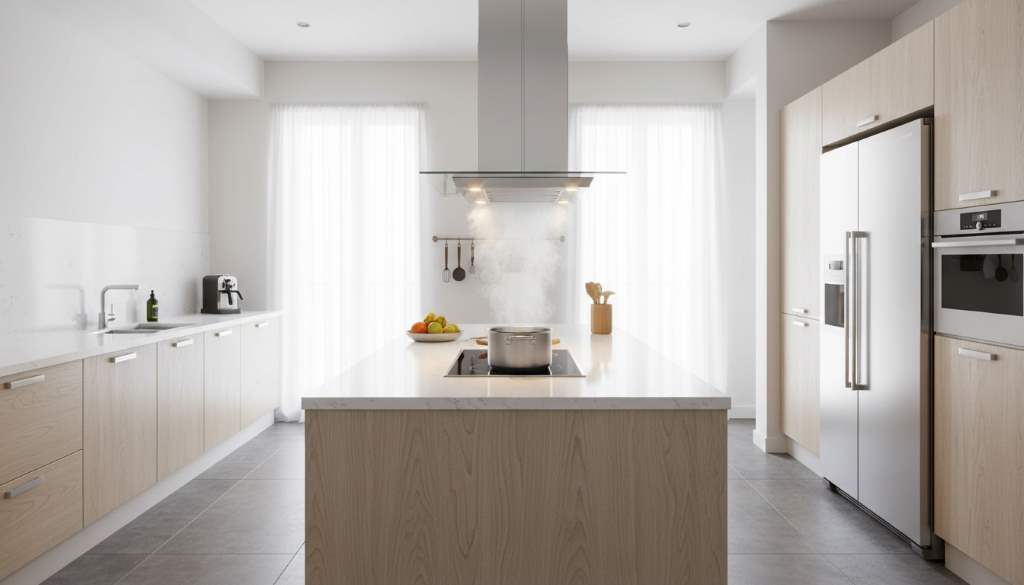
Proper ventilation keeps your kitchen fresh. Cooking produces grease and odors that linger without removal. A hood tackles these issues directly.
Moreover, it protects your health. Fumes from gas stoves include harmful particles. Regular use reduces exposure risks. Families breathe easier in clean air.
Additionally, the hood preserves your kitchen. Grease buildup damages cabinets and walls over time. Effective extraction prevents this mess. Your space stays pristine longer.
Furthermore, lighting enhances safety. Built-in lights illuminate the cooktop area. You spot spills and avoid burns. This feature proves handy during evening meals.
In addition, style boosts appeal. A well-chosen hood serves as a focal point. It ties the room together visually. Guests notice the polished look.
Also, energy efficiency improves. Modern hoods use less power for strong performance. You save on bills while maintaining comfort. Smart choices pay off.
Finally, resale value increases. Homebuyers seek updated kitchens with good ventilation. This upgrade attracts interest. Your investment returns when selling.
Types of Kitchen Island Range Hoods
Several options exist for island setups. Each type offers unique advantages. Explore them to find your fit.
First, canopy hoods provide broad coverage. They resemble upside-down funnels. Air pulls up through filters efficiently.
Moreover, chimney-style hoods add height. They mimic traditional fireplaces. This design suits rustic or classic kitchens.
Additionally, insert hoods fit into custom cabinets. They blend seamlessly with surroundings. You achieve a built-in appearance.
Furthermore, downdraft hoods rise from countertops. They hide when not in use. Space-saving appeals to minimalists.
In addition, convertible hoods switch modes. Use them ducted or ductless. Flexibility helps in various homes.
Also, under-cabinet islands adapt well. Though less common, they work with overhead storage. Creativity expands possibilities.
Finally, smart hoods connect to apps. Control settings remotely. Technology integrates into daily routines.
Planning Your Installation
Start with assessment. Measure your island and ceiling height. Note any obstacles like beams.
Moreover, check electrical access. Hoods need power for fans and lights. Plan wiring routes early.
Additionally, evaluate ductwork. Ducted systems require exterior vents. Map the path to avoid complications.
Furthermore, gather permits if needed. Local regulations vary. Contact authorities to comply.
In addition, select materials. Stainless steel resists corrosion. Glass cleans easily. Durability guides choices.
Also, budget time wisely. Installs take several hours. Schedule around your routine.
Finally, consult professionals for complex setups. Experts handle tricky elements. Peace of mind follows.
Tools and Materials Needed
Prepare everything beforehand. This streamlines the process. Gather items systematically.
- Screwdriver set for various fasteners.
- Drill with bits for holes in ceilings.
- Measuring tape for accurate dimensions.
- Level to ensure straight alignment.
- Wire strippers for electrical connections.
- Duct tape and clamps for securing vents.
- Safety goggles and gloves for protection.
Moreover, materials include the hood unit itself. Add mounting brackets. Include duct pipes if venting outside.
Additionally, have wire nuts ready. They connect electrical lines safely. Caulk seals gaps against air leaks.
Furthermore, extension cords help during setup. Test power sources first. Organization prevents delays.
Step-by-Step Installation Guide
Follow these steps carefully. Patience ensures success. Begin with preparation.
Preparing the Space
Clear the island area. Remove any items below. This creates room to work.
Moreover, turn off power. Locate the circuit breaker. Safety comes first always.
Additionally, mark the center. Use tape on the ceiling. Alignment starts here.
Furthermore, check height again. Adjust plans if needed. Precision avoids rework.
Mounting the Hood
Attach brackets securely. Screw them into ceiling joists. Stability matters greatly.
Next, lift the hood into place. Team up with a helper. Weight distribution helps.
Then, connect ducts if applicable. Seal joints tightly. Airflow depends on this.
After that, wire the electricals. Match colors correctly. Double-check connections.
Finally, test the unit. Power on briefly. Fans and lights should function.
Venting Options
Decide on ducted or ductless. Ducted removes air outside. Efficiency shines here.
For ducted, route pipes through walls. Use elbows for turns. Smooth paths work best.
In ductless, install filters. They trap particles. Replace them regularly.
Moreover, ensure vents exit properly. Avoid blockages. Fresh air circulates better.
Electrical Connections
Strip wires carefully. Expose enough copper. Twists secure bonds.
Connect ground wires first. Safety grounds equipment. Prevent shocks effectively.
Then, join hot and neutral. Use approved connectors. Codes guide practices.
After wiring, insulate exposed areas. Tape wraps neatly. Professional finishes impress.
Finally, restore power. Test all features. Adjustments fine-tune operation.
Finishing Touches
Caulk around edges. Seal prevents drafts. Clean lines enhance appearance.
Moreover, clean the hood. Remove protective films. Shine adds appeal.
Additionally, adjust fan speeds. Listen for smooth operation. Quietness confirms quality.
Furthermore, install light bulbs if needed. Brighten the space. Cooking improves visibly.
Related:
Must-Have KitchenAid KPDR Pasta Accessories for Home Chefs
How Much Do Luxury Kitchens Cost?
Safety Considerations During Installation
Prioritize protection always. Risks lurk in home projects. Awareness mitigates them.
First, wear gear. Goggles shield eyes from debris. Gloves protect hands.
Moreover, use stable ladders. Secure footing prevents falls. Heights demand caution.
Additionally, handle electricity wisely. Shut off breakers. Verify with testers.
Furthermore, avoid overloading circuits. Hoods draw power. Balance loads evenly.
In addition, ventilate the area. Fumes from tools dissipate. Fresh air refreshes.
Also, follow instructions. Manuals detail specifics. Deviations cause issues.
Finally, seek help for heavy lifts. Strains hurt progress. Teamwork lightens burdens.
Common Mistakes to Avoid
Many pitfalls trap beginners. Learn from others. Sidestep errors smartly.
First, ignoring measurements leads to misfits. Double-check dimensions always.
Moreover, skipping permits invites fines. Compliance saves headaches later.
Additionally, poor venting reduces efficiency. Plan routes thoroughly.
Furthermore, loose connections spark dangers. Tighten everything securely.
In addition, rushing skips steps. Patience builds quality.
Also, overlooking codes violates rules. Research local standards.
Finally, neglecting tests misses flaws. Verify operations early.
Maintenance Tips for Longevity
Keep your hood performing well. Regular care extends life. Simple habits help.
First, clean filters monthly. Grease accumulates quickly. Soak in warm water.
Moreover, wipe surfaces weekly. Mild soap removes splatters. Shine preserves looks.
Additionally, inspect ducts yearly. Blockages hinder airflow. Clear them promptly.
Furthermore, check lights often. Replace burnt bulbs. Illumination stays consistent.
In addition, listen for noises. Unusual sounds signal issues. Address them fast.
Also, schedule professional checks. Experts spot hidden problems. Prevention beats cures.
Finally, document routines. Logs track maintenance. Consistency builds reliability.
Troubleshooting Common Issues
Problems arise sometimes. Solutions restore function. Identify causes first.
If fans hum but don’t spin, check power. Loose wires disrupt flow. Reconnect firmly.
Moreover, weak suction points to clogs. Clean vents thoroughly. Air moves freely again.
Additionally, noisy operation suggests imbalances. Tighten mounts. Vibrations lessen.
Furthermore, lights flicker from faulty bulbs. Swap them out. Stability returns.
In addition, odors persist with dirty filters. Wash or replace. Freshness improves.
Also, controls fail due to wiring. Inspect connections. Fixes revive responses.
Finally, seek pros for complex fixes. Expertise handles tough cases.
Environmental Impact and Sustainability
Consider eco-friendly choices. Hoods affect the planet. Smart picks reduce footprints.
First, energy-efficient models save power. Look for rated units. Bills drop accordingly.
Moreover, recyclable materials matter. Steel reuses well. Waste lessens over time.
Additionally, proper venting clears pollutants. Indoor air purifies naturally. Health benefits follow.
Furthermore, sustainable manufacturing counts. Brands commit to green practices. Support them actively.
In addition, long-lasting designs cut replacements. Durability conserves resources. Choices echo values.
Also, integrate with smart homes. Automation optimizes use. Efficiency climbs higher.
Finally, educate yourself on impacts. Knowledge drives better decisions. Planet thanks you.
Integrating with Kitchen Design
Blend the hood seamlessly. Design harmony elevates spaces. Thoughtful pairing works wonders.
First, match materials. Stainless complements modern appliances. Unity flows visually.
Moreover, consider colors. Neutral tones blend easily. Accents pop strategically.
Additionally, size proportions balance rooms. Oversized dominates; undersized fades. Harmony rules.
Furthermore, lighting coordinates fixtures. Consistent styles unify aesthetics. Ambiance warms.
In addition, position centrally. Islands anchor kitchens. Hoods enhance focus.
Also, add accessories. Shelves hold spices. Functionality meets form.
Finally, personalize touches. Engravings add character. Uniqueness shines through.
Advanced Features to Consider
Modern hoods offer extras. Innovations improve experiences. Explore options wisely.
First, sensor tech detects smoke. Fans activate automatically. Convenience simplifies cooking.
Moreover, remote controls adjust settings. Operate from afar. Flexibility adapts routines.
Additionally, quiet modes reduce noise. Conversations continue uninterrupted. Comfort rises.
Furthermore, LED lights save energy. Long life cuts changes. Brightness endures.
In addition, app integration tracks usage. Data informs habits. Insights guide improvements.
Also, self-cleaning filters ease upkeep. Cycles handle grime. Time frees up.
Finally, voice commands respond hands-free. Tech merges with life. Future arrives now.
Case Studies: Real-Life Installations
Real examples illustrate successes. Homeowners share stories. Lessons emerge clearly.
One family renovated their open kitchen. They chose a ducted canopy hood. Installation took a weekend. Air quality soared immediately. Cooking gatherings increased.
Moreover, a chef installed a smart model. Sensors managed heavy use. Noise stayed low. Professional results followed at home.
Additionally, urban dwellers picked ductless. Space limits guided choices. Filters worked efficiently. Odors vanished quickly.
Furthermore, a DIY enthusiast tackled mounting. Tools prepared well. Challenges built skills. Satisfaction grew immensely.
In addition, historic home owners blended styles. Chimney design fit eras. Preservation met modernity.
Also, eco-conscious folks selected efficient units. Energy savings accumulated. Values aligned perfectly.
Finally, large households needed power. High-speed fans handled volumes. Comfort sustained daily.
Latest Research on Kitchen Ventilation
Studies guide best practices. Science backs decisions. Stay informed always.
A 2024 report from the American Lung Association stresses ventilation. Cooking particles link to lung issues. Hoods cut risks by 70 percent.
Moreover, Harvard research shows gas stoves emit nitrogen dioxide. Effective hoods reduce levels significantly. Health protects proactively.
Additionally, energy studies from the Department of Energy highlight efficiency. Modern fans use 50 percent less power. Savings add up yearly.
Furthermore, indoor air quality surveys reveal trends. Homes with islands need stronger systems. Data drives designs.
In addition, material durability tests favor stainless. Resistance holds over years. Choices endure tests.
Also, noise impact research favors quiet models. Lower decibels improve well-being. Peace integrates daily.
Finally, sustainability analyses promote recyclables. Reduced waste benefits environments. Progress continues forward.
Conclusion
Installing a kitchen island range hood involves planning, tools, and careful steps. You learned types, benefits, and maintenance for lasting performance. Safety and design integration enhance your space. Avoid common mistakes to ensure smooth operation. Now, grab your tools and start the project. Transform your kitchen today for better cooking experiences.
FAQs
What size kitchen island range hood do I need?
Match the hood to your cooktop width. Add 3 to 6 inches on each side for coverage. This captures fumes effectively.
Can I install a kitchen island range hood myself?
Yes, with basic skills and tools. Follow steps closely. Complex wiring might need pros.
How high should a kitchen island range hood be mounted?
Place it 28 to 36 inches above the cooktop. This balances access and efficiency. Check codes for variations.
What venting option is best for my kitchen?
Ducted suits outdoor access for better removal. Ductless works in restricted spaces with filters.
How often should I clean my kitchen island range hood?
Wipe surfaces weekly. Clean filters monthly. Inspect ducts yearly for optimal function.
References
- https://www.nih.gov/news-events/news-releases/study-links-poor-kitchen-ventilation-respiratory-risks