
When temperatures rise, dogs struggle to stay cool. Unlike humans, dogs cannot sweat through their skin. They rely mostly on panting and limited sweat glands in their paws. Because of this, overheating becomes a real risk during hot weather.
Veterinary data shows that dogs are vulnerable to heat stress when temperatures exceed 85°F (29°C), especially during physical activity. According to research referenced by veterinary health organizations, heatstroke can occur in as little as 10–15 minutes in extreme heat if a dog cannot cool down effectively.
This is why dog cooling accessories such as cooling vests and cooling mats have become popular summer dog gear. These tools help regulate body temperature and reduce the risk of heat-related illness. But many dog owners ask the same question: Which option works better—a dog cooling vest or a cooling mat?
The short answer: both products help, but they work in different situations. Cooling vests cool dogs during movement, while cooling mats work best when a dog is resting.
In this guide, we break down how each option works, their benefits, limitations, and when to use them. By the end, you will know exactly which cooling solution fits your dog’s lifestyle and summer routine.
What Are Dog Cooling Accessories and Why Do Dogs Need Them in Summer?
Dog cooling accessories are products designed to help regulate a dog’s body temperature in hot weather. Common examples include cooling vests, cooling mats, cooling bandanas, and elevated cooling beds.
These tools are part of essential summer dog gear because dogs have limited natural cooling mechanisms.
Quick Answer
Dog cooling accessories help reduce heat stress by absorbing body heat or promoting evaporative cooling.
Why Overheating Is Dangerous for Dogs
Dogs maintain an average body temperature between 101°F and 102.5°F (38.3–39.2°C). When their temperature rises above 104°F, heat exhaustion may occur.
According to veterinary emergency reports, heatstroke cases increase sharply during summer months, especially among:
- Brachycephalic breeds (Bulldogs, Pugs)
- Large dogs with thick coats
- Overweight dogs
- Senior dogs
- Highly active breeds
Cooling accessories provide an external method to help maintain safe body temperature levels.
What Is a Dog Cooling Vest and How Does It Work?
A dog cooling vest is wearable summer dog gear designed to lower body temperature through evaporative cooling.
Quick Answer
A dog cooling vest works by absorbing water and slowly evaporating it, which pulls heat away from the dog’s body.
How Cooling Vests Function
The process is simple and based on the same principle as human athletic cooling towels.
- The vest is soaked in water.
- Excess water is squeezed out.
- The vest is placed on the dog.
- Evaporation removes heat from the dog’s body.
This process can lower surface temperature by several degrees depending on humidity and airflow.
Where Cooling Vests Work Best
Cooling vests are most effective when dogs are:
- Walking outdoors
- Hiking
- Playing in the yard
- Training or exercising
- Traveling
They are particularly useful for working dogs or high-energy breeds.
Advantages of Dog Cooling Vests
- Portable and wearable
- Provide cooling during movement
- Help prevent overheating during outdoor activities
- Reusable and easy to reactivate with water
Limitations of Cooling Vests
- Require water to activate
- Less effective in very humid climates
- Need occasional re-wetting
- Some dogs need time to adjust to wearing gear
What Is a Dog Cooling Mat and How Does It Work?
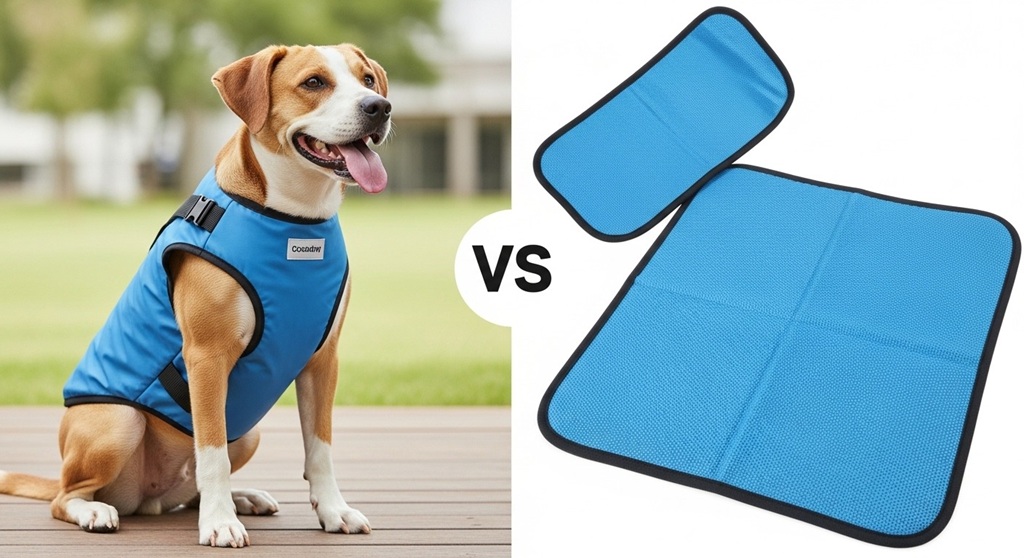
A dog cooling mat is a pad designed to absorb and dissipate heat when a dog lies down.
Quick Answer
Cooling mats lower temperature through pressure-activated gel, water circulation, or breathable materials that draw heat away from the body.
Types of Cooling Mats
There are three main types of cooling mats available:
1. Gel Cooling Mats
- Contain pressure-activated cooling gel
- Activate when the dog lies down
- Require no water or electricity
2. Water-Filled Cooling Mats
- Filled with cool water
- Provide consistent cooling
- Require occasional refilling
3. Breathable Cooling Fabric Mats
- Use airflow and breathable materials
- Often combined with raised beds
Where Cooling Mats Work Best
Cooling mats are ideal for:
- Indoor resting areas
- Crates and kennels
- Sleeping areas
- Post-walk recovery
Advantages of Cooling Mats
- No setup required for many models
- Comfortable resting surface
- Continuous cooling while lying down
- Good for indoor use
Limitations of Cooling Mats
- Only work when the dog lies on them
- Not portable during walks
- Some gel mats may puncture if chewed
Dog Cooling Vest vs Cooling Mat: What Are the Key Differences?
Both cooling solutions help reduce heat stress, but they serve different purposes.
| Feature | Cooling Vest | Cooling Mat |
|---|---|---|
| Cooling Method | Evaporative cooling | Gel, water, or breathable material |
| Best For | Outdoor activity | Resting and sleeping |
| Mobility | Wearable | Stationary |
| Ease of Use | Requires water activation | Usually ready to use |
| Ideal Location | Walks, hikes, travel | Home, crates, beds |
Because they serve different roles, many dog owners use both products together.
Which Cooling Option Works Better for Active Dogs?
Quick Answer: Cooling vests work better for active dogs because they provide temperature regulation during movement.
Dogs that exercise in summer generate body heat quickly. A cooling vest helps slow temperature buildup while the dog is still active.
Working dog trainers often use cooling vests during:
- Agility training
- Search and rescue drills
- Long outdoor walks
- Outdoor competitions
These vests help extend safe activity time in warm weather.
Which Cooling Option Works Better for Resting Dogs?
Quick Answer: Cooling mats are better for resting dogs because they continuously absorb heat while the dog lies down.
After physical activity, dogs often need a cool surface to recover. Cooling mats provide passive cooling without requiring the dog to wear anything.
This makes them ideal for:
- Senior dogs
- Dogs recovering from exercise
- Indoor relaxation during hot days
Can You Use Cooling Vests and Cooling Mats Together?
Quick Answer: Yes. Using both provides full-day temperature control.
A common routine recommended by many pet care professionals is:
- Use a cooling vest during outdoor activity.
- Let the dog rest on a cooling mat indoors.
This approach helps regulate body temperature throughout the day.
What Factors Should You Consider Before Buying Summer Dog Gear?
1. Climate
Evaporative cooling works best in dry environments. In humid areas, cooling mats may perform better.
2. Dog Breed
Thick-coated breeds often benefit from additional cooling support.
3. Activity Level
Active dogs benefit more from cooling vests.
4. Size and Fit
Proper sizing ensures the cooling gear works effectively.
5. Durability
Dogs that chew or scratch may require stronger materials.
Conclusion: Dog Cooling Vest vs Cooling Mat — Which One Should You Choose?
Both cooling products help protect dogs from summer heat, but they solve different problems.
A dog cooling vest is best for activity. It helps regulate body temperature while your dog walks, runs, or plays outdoors.
A cooling mat works best during rest. It provides a cool surface for dogs to recover after exercise or relax indoors.
Instead of choosing one over the other, many dog owners combine both as part of their summer dog gear routine.
If your dog spends time outdoors during warm weather, investing in the right cooling accessories can reduce the risk of overheating and improve comfort.
Want to keep your dog safe this summer? Explore reliable dog cooling accessories and create a simple heat-safety routine that protects your pet every day.
Frequently Asked Questions (FAQs)
Do dog cooling vests really work?
Yes. Cooling vests work through evaporative cooling, which helps remove heat from a dog’s body. When soaked in water, the vest gradually releases moisture and lowers surface temperature.
Are cooling mats safe for dogs?
Most cooling mats are safe when used properly. Gel-based mats are designed to be non-toxic, but dogs that chew aggressively should be supervised.
How long does a dog cooling vest stay cool?
Most cooling vests remain effective for 1–3 hours depending on weather conditions and airflow. Re-wetting the vest reactivates the cooling effect.
Do cooling mats require refrigeration?
No. Most modern cooling mats activate automatically through gel or breathable materials and do not require refrigeration.
Which dogs need cooling gear the most?
Breeds with short snouts, thick coats, or large body sizes benefit most from cooling accessories. Senior dogs and overweight dogs are also more vulnerable to heat.
Can cooling accessories prevent heatstroke?
Cooling gear helps reduce overheating risk but should not replace proper hydration, shade, and limited outdoor activity during peak heat.
Should dogs wear cooling vests indoors?
Cooling vests are usually unnecessary indoors unless the indoor temperature is very warm. Cooling mats are generally better for indoor cooling.
Read More Also: How to Practice Mindfulness During a Difficult Conversation
Up Next: Why a health and welfare LPA is essential when making care decisions