You finally have a spotless floor, but are you sure it is actually clean? Mopping with plain water spreads germs around rather than eliminating them. If you are tired of unsanitary streaks and want a quick, spray-and-vac solution, you need a system that truly kills bacteria. Using the right Shark VACMOP disinfectant is the key to turning your hard floors from visibly clean to hygienically safe without the hassle of buckets, wringing, or rinsing. This guide will walk you through exactly how to disinfect like a pro, what solutions work best, and where to avoid common mistakes that leave dangerous germs behind.
What is the Best Disinfectant Solution for the Shark VACMOP?
The most effective disinfectant solution for your Shark VACMOP is the official Shark VACMOP Multi-Surface Flooring Concentrate, which is specifically formulated to kill 99.9% of bacteria when used correctly. Using third-party cleaners or DIY mixtures can damage the spray mechanism, create streaks, or void your warranty, so sticking with the manufacturer’s solution guarantees safety and performance.
Why You Should Avoid DIY Vinegar and Bleach Mixtures
Many homeowners assume that natural cleaners like vinegar or aggressive chemicals like bleach are safe for all mops. However, the Shark VACMOP is a low-moisture system. Vinegar is acidic and can eat away at the internal seals and plastic components over time. Bleach produces dangerous fumes when mixed with the chemicals already in the pads and can damage floor finishes. The official concentrate is pH-neutral and designed to leave no sticky residue while sanitizing effectively.
Where to Find the Official Cleaning Concentrate
The official Shark VACMOP concentrate is widely available at major retailers such as Walmart, Target, Amazon, and directly from Shark’s website. Look for the blue bottle labeled specifically for the VACMOP system. A single bottle typically makes several full tank refills, offering a cost-effective solution compared to pre-moistened disposable alternatives. Always check the bottle to ensure it is marked as a disinfectant cleaner, not just a general floor refresher.
How the Solution Kills Germs Without Over-Wetting Floors
The magic lies in the electrostatic pad technology combined with the antibacterial spray. The pad actively attracts dirt and moisture, trapping it in the fibers. When you spray the concentrate solution onto the floor directly in front of the pad, the chemicals require a short dwell time (usually 30–60 seconds) to break down cell walls of bacteria. Because the VACMOP uses a mist rather than a flood of water, the floor dries quickly, preventing bacteria from re-establishing in standing liquid.
How Often Should You Disinfect Your Floors with the Shark VACMOP?
You should disinfect high-traffic areas and kitchens daily, while low-traffic living spaces can be disinfected once or twice a week. However, the frequency depends entirely on your household’s traffic, the presence of pets, and whether anyone is sick. Disinfecting too often with chemicals can be wasteful, while disinfecting too infrequently allows biofilms to build up.
Daily Disinfection for Kitchens and Bathrooms
Kitchen floors collect food splatters, grease, and raw chicken juice drips. Use the disinfectant setting every day in the kitchen to prevent Salmonella and E. coli buildup. Bathrooms require daily disinfection around the toilet base and sink areas where splash-back occurs. If you cook raw meat frequently, spot-disinfect the area immediately after cooking, then do a full pass at the end of the day.
Weekly Disinfection for Bedrooms and Living Rooms
In bedrooms and formal living rooms where people wear shoes less often, a weekly disinfecting pass is usually sufficient. If you have crawling babies or pets that sleep on the floor, increase the frequency to every other day. A good rule of thumb is to use a dry vacuum first, then follow up with the VACMOP disinfectant spray. This two-step process ensures you don’t just move dust around in the wet solution.
Immediate Disinfection After Spills or Accidents
Never wait for a scheduled cleaning if there is a biological spill like pet urine, vomit, or blood. The VACMOP is perfect for these events because you can spray the disinfectant directly on the mess, let it sit for the recommended time, and then wipe it up in one pass. This immediate action kills pathogens on contact and prevents stains from setting into porous grout or wood.
How to Use Shark VACMOP Disinfectant on Hardwood Floors?
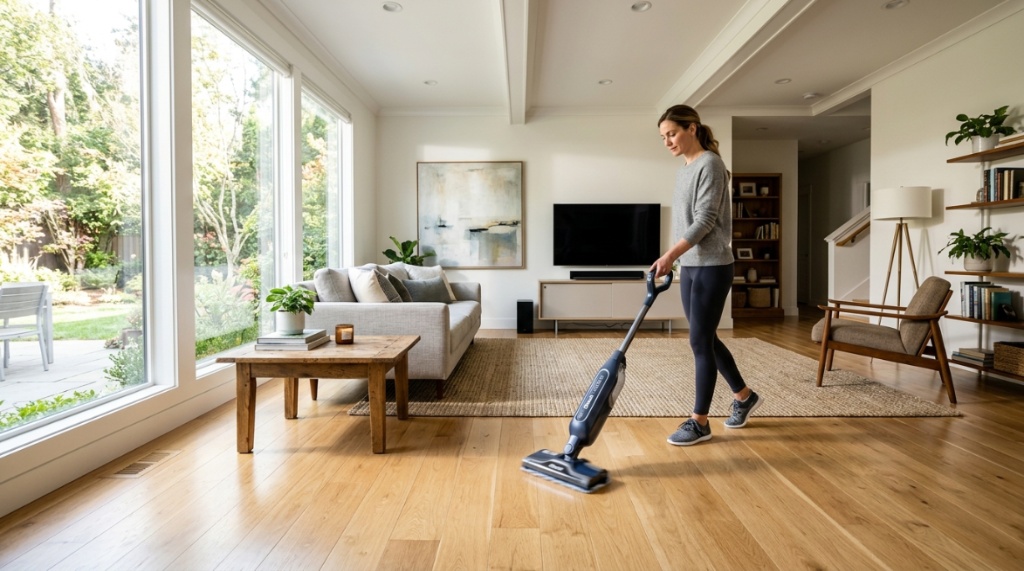
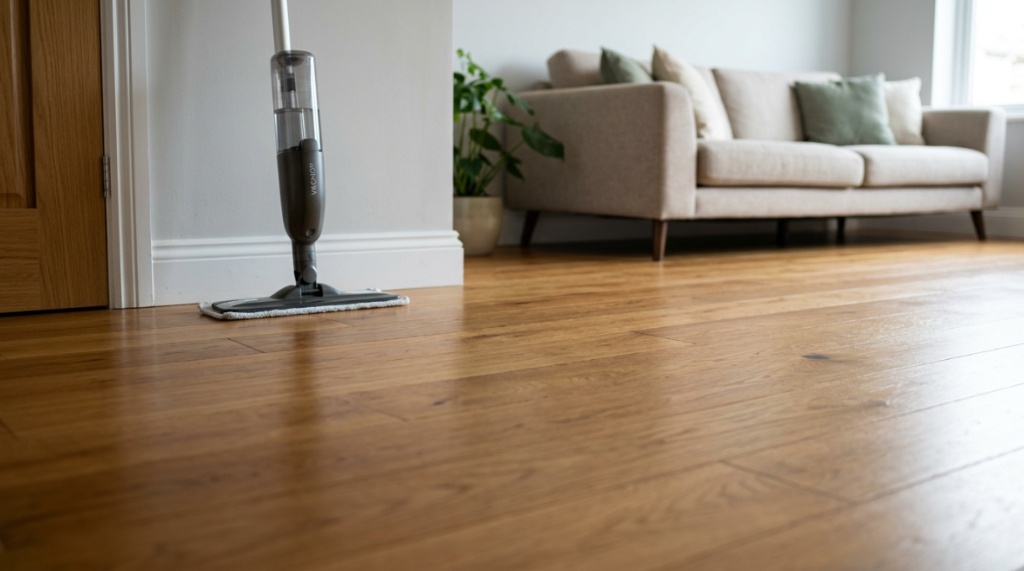
Using Shark VACMOP disinfectant on hardwood floors is safe as long as you use the correct spray setting and never over-saturate the wood. The key is to use the “Hard Floor” setting (if your model has one) and spray only a fine mist, followed immediately by the dry electrostatic pad. Hardwood is porous, and excess moisture causes warping and cupping, so the VACMOP’s low-moisture design is actually ideal for wood.
Step-by-Step Process for Sealed Hardwood
First, sweep or vacuum the floor thoroughly to remove abrasive grit. Fill the reservoir with the official Shark concentrate, not floor oil or wax products. Spray a thin line of solution about 12 inches ahead of the mop head. Glide the VACMOP forward with even pressure. Do not press down hard to force liquid into the seams. Allow the pad to wick up the solution immediately. For best results, make figure-eight patterns to spread the disinfectant evenly without pooling.
What to Avoid on Unsealed or Worn Wood
If your hardwood finish is scratched or worn down to bare wood, the liquid can penetrate and cause black staining or swelling. In this case, avoid using the spray entirely on that area. Instead, use a slightly dampened microfiber cloth to spot-clean worn boards. The VACMOP is not recommended for unsealed bamboo, cork, or historic wide-plank floors. Always test a small inconspicuous area first if you are unsure about the seal quality.
How to Maintain the Finish After Disinfecting
After disinfecting, you may notice a slightly hazy film if you used too much solution. To restore the shine, run a dry clean pad over the floor immediately after disinfecting. This buffs the finish and removes any excess chemicals. Do not use wax or polish additives in the VACMOP tank, as these clog the spray nozzle and leave a slippery residue that attracts dirt,While the Shark VACMOP is a powerhouse for sealed hard floors, different architectural features in your home require specialized care. If you have a staircase or balcony nearby, don’t forget to check out our guide on Three Balustrade Materials and How to Clean Them to keep your entire space looking pristine.
Can You Disinfect Tile and Grout Lines with the VACMOP?
Yes, the Shark VACMOP is excellent for disinfecting tile floors and lightly cleaning grout lines, but it cannot remove deep-set grout stains. The electrostatic pad grabs the dirty water from the grout surface, and the disinfectant kills mold and mildew spores present on the top layer. For sanitizing high-moisture areas like shower floors, this is a practical daily maintenance tool.
Why Grout Stays Cleaner with Regular Disinfection
Grout is porous and traps bacteria, soap scum, and body oils. When you spray the disinfectant onto the grout lines and work it in with the VACMOP pad, the chemicals penetrate the porous surface to kill the bacteria living there. Doing this weekly prevents the biofilm from becoming a permanent dark stain. The key is to let the solution sit on the grout for at least one minute before mopping over it.
The Best Technique for Textured Tile
Textured tile (like slate or tumbled marble) has deep crevices that trap germs. The standard VACMOP pad may glide over the peaks without touching the valleys. To solve this, apply the disinfectant spray directly onto the tile surface, then use a gentle back-and-forth scrub motion with the VACMOP rather than a smooth glide. The friction forces the pad fibers into the texture. Rinse the pad frequently and use a fresh pad for the final buffing pass to remove residue from the crevices.
When You Need a Steam Cleaner Instead
If your grout is heavily soiled with black mold or deep dirt, the VACMOP disinfectant may not be powerful enough. Steam cleaners use high heat to lift dirt from deep within the grout. Use the VACMOP for twice-weekly maintenance after a deep steam clean, but do not rely on it for initial restoration of neglected grout.
Which Shark VACMOP Model is Best for Disinfecting Large Areas?
For disinfecting large areas like open-concept living rooms or long hallways, the Shark VACMOP VM200 series or the VM270 model offers the widest spray coverage and largest pad surface area, reducing the number of pad changes needed. The cordless, stick-style design with a large water tank allows you to cover over 1,000 square feet without refilling.
Comparing Spray Coverage and Tank Size
Model VM200 features a 12-ounce tank and a manual trigger spray that you control. The VM270 has an automatic spray trigger and a slightly wider spray pattern. For large areas, the automatic spray is more efficient because you don’t have to squeeze continuously. However, the manual trigger gives you more control over how much liquid you apply, which is better for delicate floors. Both models use the same disinfectant concentrate,To get the best results with your Shark VACMOP disinfectant, remember that consistency and proper technique matter more than the brand of the device. Using the official concentrate, allowing adequate dwell time, and maintaining your pads and spray nozzle will turn a simple mopping chore into a genuine health regimen for your home.
Battery Life and Continuous Disinfection
If you are disinfecting a large home in one session, battery life matters. Most VACMOP models are cordless and run on rechargeable batteries. The VM250 series typically lasts about 25–30 minutes, which is enough for a standard two-bedroom apartment. For a bigger house, look for a model with an extended battery pack or a corded option. Running out of battery mid-disinfection means the bacteria-killing solution may dry on the floor without being properly wiped up, leaving a film.
Pad Durability for Multiple Room Passes
Large areas require multiple passes. The washable pads included with the VM200 series can handle up to 500 square feet before losing electrostatic charge. For areas larger than that, swap to a fresh pad halfway through. Reusing a saturated pad simply spreads dirty water around instead of disinfecting it. Always have two or three extra pads on hand for big cleaning jobs.
How Does the Shark VACMOP Disinfectant Compare to Swiffer WetJet?
The Shark VACMOP disinfectant system generally kills a broader spectrum of bacteria and uses a better pad technology than the Swiffer WetJet, making it the superior choice for households that prioritize true hygiene. While Swiffer is convenient and widely available, it relies on a thin cloth that can leave streaks and does not trap dirt as effectively as the electrostatic VACMOP pads.
Kill Claims and Chemical Composition
Shark’s official concentrate is EPA-registered to kill 99.9% of household bacteria, including Staph, Salmonella, and Influenza A. Swiffer WetJet solution is also antimicrobial, but several studies show it is less effective at removing sticky biofilms from grout and textured surfaces. Shark uses a surfactant that breaks down grease better, which is critical for disinfecting because dirt shields bacteria from the chemicals.
Pad Technology and Dirt Trapping
The Shark VACMOP pads are thicker and contain electrostatic fibers that act like a magnet for dust and hair. The Swiffer WetJet pad is a thin absorbent sheet that often pushes dirt into corners. When disinfecting, you must physically remove the dirt before the chemicals can work. The VACMOP pad does both jobs simultaneously, which is why it is often rated higher in performance tests.
Cost Efficiency Over Time
Initially, the Shark VACMOP costs more than a Swiffer starter kit. However, because Shark pads are washable (up to 100 times) and the concentrate refills are concentrated, the long-term cost is significantly lower. Swiffer requires constant purchase of single-use pads and solution bottles. Over one year, using the VACMOP with washable pads saves approximately 60% compared to buying Swiffer refills.
How to Maintain Your Shark VACMOP for Long-Term Disinfection Performance?
To keep your VACMOP disinfecting effectively, you must clean the spray nozzle, wash the pads correctly, and recharge the battery after every use. A neglected VACMOP will spray unevenly, leaving dry spots where bacteria survive, or produce a weak spray that fails to cover the floor adequately.
Cleaning the Spray Nozzle to Prevent Clogs
The most common problem is a clogged nozzle. Hard water minerals and solution residue accumulate. Every two weeks, remove the tank and rinse the nozzle with warm water. Use a paperclip to clear the tiny hole if the spray pattern becomes narrow or sputters. Do not submerge the entire handle in water; only rinse the nozzle end.
Washing Pads Without Losing Electrostatic Charge
Wash the pads separately in cold water with no fabric softener or bleach. Fabric softener coats the fibers and ruins the electrostatic charge that attracts dust. Air dry the pads if possible; high heat from a dryer can shrink the fibers and reduce their absorbency. Replace pads every three to four months or when they start to smell musty even after washing.
Storing the Unit Correctly
Store the VACMOP upright in a dry, cool place. Do not leave the tank full of cleaner for more than a week, as the chemicals can degrade the rubber seals. Empty the tank, spray a small amount of water through the nozzle to flush it, and let it dry before storage. A dry machine is a sanitary machine.
Frequently Asked Questions
Can I use any floor cleaner in the Shark VACMOP?
No, you should only use the official Shark VACMOP Multi-Surface Flooring Concentrate. Other cleaners can damage the spray mechanism, create excessive foam, or contain oils that make floors slippery and attract dirt.
How long does the disinfectant need to sit to kill germs?
According to the manufacturer, the solution must remain wet on the surface for at least 30 seconds to kill 99.9% of bacteria. For tough pathogens like Norovirus or Staph, a dwell time of 60 seconds is recommended before wiping.
Is the Shark VACMOP safe for laminate flooring?
Yes, it is safe for laminate flooring as long as you do not over-saturate it. Use the low-moisture spray setting and never let puddles sit on the seams. Laminate is highly sensitive to moisture, so quick drying is essential.
Why is my VACMOP leaving white streaks on the floor?
White streaks are usually caused by using too much solution or using a dirty pad. The solution dries and leaves a mineral residue. Use less spray per pass and ensure your pad is clean and damp, not soaking wet. Buff immediately with a dry pad.
Can I wash the VACMOP pads in the dishwasher?
No, washing pads in the dishwasher can damage the electrostatic fibers and the Velcro backing. Always wash them in a gentle cycle in a washing machine with cold water and air dry them to preserve their effectiveness.
Does the Shark VACMOP kill COVID-19 (SARS-CoV-2)?
The official Shark concentrate is tested against similar enveloped viruses and has been shown to be effective against Influenza A. For COVID-19 specific claims, always check the EPA registration number on the bottle against the current EPA List N for disinfectants that kill the specific SARS-CoV-2 virus.
How often should I replace the battery?
The rechargeable battery typically lasts for about 300–500 charge cycles. If you notice the unit dying after cleaning only a small area, or if it takes much longer to charge, it is time to replace the battery. Replacement batteries are available from Shark’s customer service.