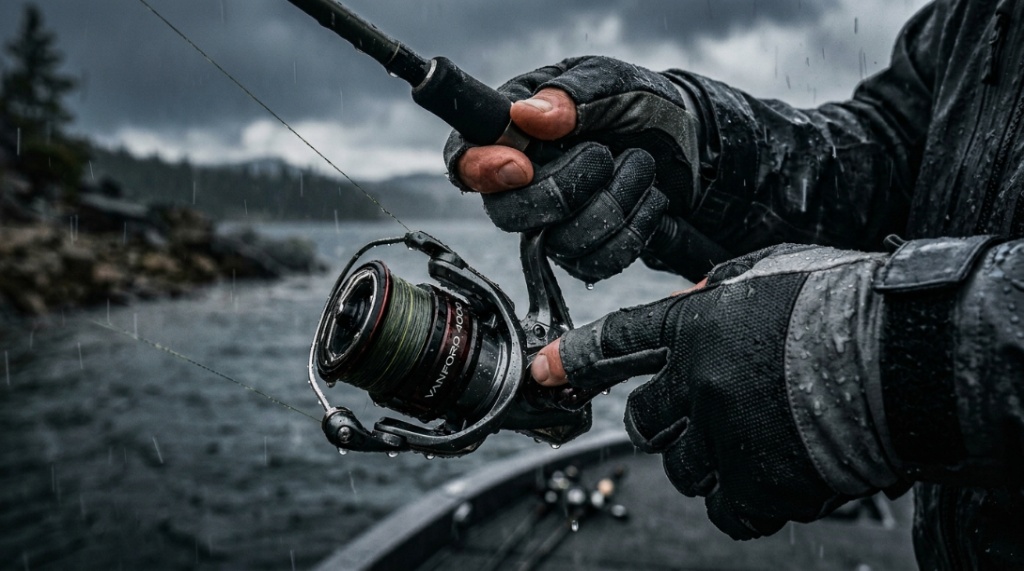
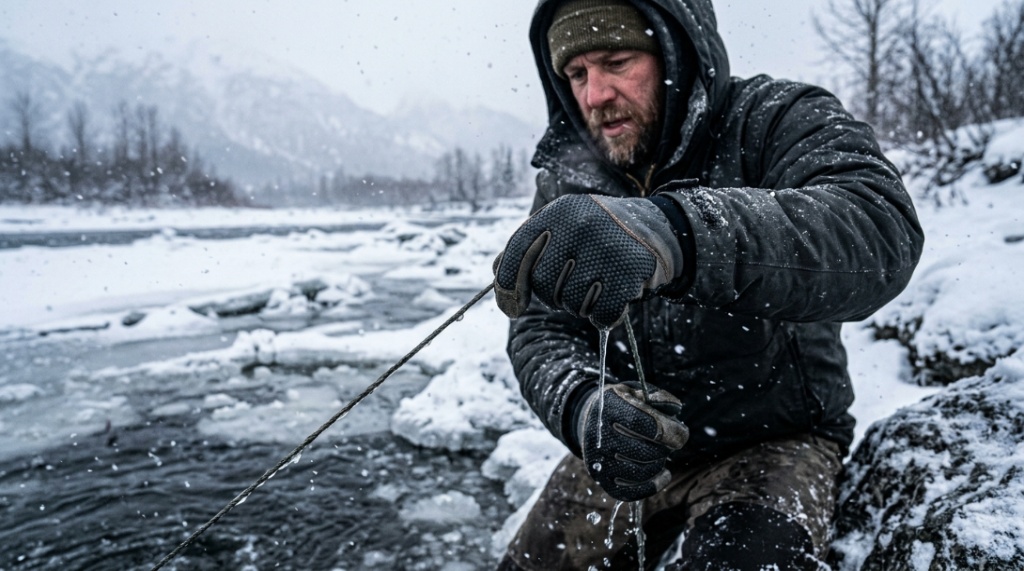
On a salmon run last October, the weather cycled through all three — started raining at dawn, turned to sleet by noon, and became full snow by 2 PM. My waterproof fishing gloves handled every transition without a single moment of wet or cold hands. The guy beside me switched gloves twice and still ended up with soaked, frozen fingers because his “all-weather” gloves were designed for marketing claims rather than actual multi-condition performance. Buying insulated fishing gloves that genuinely handle rain, snow, and cold simultaneously requires understanding that these three conditions attack hand comfort through different mechanisms — and only specific material combinations address all three without compromising the dexterity fishing demands.
Why Do Most “Waterproof” Fishing Gloves Fail in Real Conditions?
Most fail because they are water-resistant (DWR coating) rather than truly waterproof (sealed membrane), or because they are waterproof from outside but trap internal perspiration that soaks insulation from within — making hands wet from their own sweat rather than external water.
Three failure modes:
- DWR vs membrane: Durable Water Repellent (DWR) is a surface coating that beads water temporarily but saturates after 30–60 minutes of continuous exposure. A waterproof membrane (Gore-Tex, eVent) is a separate internal layer that physically blocks water molecules regardless of surface saturation. Only membrane-based gloves are truly waterproof.
- Sealed vs unsealed seams: Water penetrates through stitch holes even with waterproof materials. Fully sealed/taped seams block this entry. Most budget “waterproof” gloves have unfinished seams that leak at every stitch line within minutes of rain exposure.
- Breathability failure: Non-breathable waterproof materials (rubber, PVC, sealed neoprene) trap hand moisture inside. Active fishing hands perspire significantly — trapped sweat saturates insulation within 45–60 minutes, creating cold wet conditions internally despite dry exterior.
What Specifications Actually Handle Rain, Snow, AND Cold Together?
Gloves that handle all three conditions require: a breathable waterproof membrane (minimum 10,000mm waterproof rating), sealed seams throughout, synthetic insulation rated for wet performance (not down or fleece), a gauntlet cuff that seals under layers, and textured water-shedding outer material.
Multi-condition specification requirements:
| Specification | Minimum for Multi-Condition | Ideal | Why It Matters |
|---|---|---|---|
| Waterproof rating | 10,000mm | 20,000mm+ | Resists sustained rain pressure on hand surfaces |
| Breathability | 8,000g/m²/24hr | 15,000g+ | Allows internal moisture escape during activity |
| Insulation | 100g synthetic (Thinsulate) | 150–200g PrimaLoft | Maintains warmth when damp — synthetic only |
| Seam construction | Taped critical seams | Fully sealed all seams | Prevents water entry through stitch holes |
| Cuff style | Extended (past wrist) | Gauntlet with cinch | Seals against snow/rain entry at sleeve junction |
| Outer material | Nylon/polyester with DWR | Neoprene or coated softshell | Sheds water from surface, resists wind |
Which Glove Styles Handle Multi-Condition Fishing Best?
Neoprene gloves with fold-back fingers dominate multi-condition fishing because neoprene is inherently waterproof, maintains insulation when wet, provides wind protection, and offers the flexibility needed for rod handling — all without relying on coatings or membranes that degrade over time.
Top multi-condition styles:
- 3mm neoprene with fold-back fingers (Best overall): Waterproof by material nature. Warm when wet. Flexible for casting. Fold-back fingers for knot tying. Handles rain, snow, splash, and cold simultaneously without failure. The workhorse choice for guides and serious cold-weather anglers.
- Softshell with Gore-Tex membrane (Best dexterity): Thinner construction allows superior feel and dexterity. Membrane provides waterproofing. Less inherent warmth than neoprene — compensates with better insulation layer. Ideal for anglers who prioritize feel over maximum warmth.
- Insulated neoprene mitt with liner (Maximum warmth): Thick neoprene outer plus removable insulated liner. Exceptional warmth for the coldest conditions. Reduced dexterity — best for trolling, ice fishing, or situations with minimal hand activity requirements.
The 3mm neoprene convertible glove represents the best single-purchase solution for anglers who fish through variable weather. It handles every condition adequately without excelling in any single scenario — the jack-of-all-trades that works when you cannot predict what weather the day will bring.
How Do You Layer Gloves for Extreme Multi-Condition Fishing?
A two-layer system — thin merino or synthetic liner glove inside a waterproof outer shell — provides more versatility than any single glove because you can add or remove the liner as conditions change while maintaining waterproof protection throughout the day.
Layering system for extreme conditions:
- Base layer (liner): Thin merino wool or synthetic glove liner. Provides warmth, moisture wicking, and some dexterity when worn alone. Allows bare-finger-like knot tying through thin material.
- Shell layer (outer): Waterproof, windproof outer glove sized to fit over the liner. Provides environmental protection. May have minimal insulation of its own.
- System advantages: Remove shell for dexterity tasks while maintaining warmth from liner. Add hand warmers between layers for extreme cold. Replace wet liner mid-day without losing waterproof protection. Adjust warmth level to changing conditions without carrying multiple complete glove pairs.
For anglers who fish all-day sessions through changing conditions, the layering approach outperforms any single glove because it adapts throughout the day. Morning cold demands both layers; midday warming allows shell-only; afternoon snow return brings the liner back. One system handles a 12-hour day that would defeat three pairs of single-purpose gloves.
What Budget Range Delivers Genuine Multi-Condition Performance?
$40–$80 delivers genuinely waterproof, insulated fishing gloves from reputable brands with sealed seams and quality materials — below $30 lacks the membrane and seam sealing required for true waterproofing, while above $100 provides marginal improvement suited primarily to professional guides.
- $15–$30: DWR-coated gloves that resist light rain for 30–60 minutes. No sealed seams. Inadequate for sustained precipitation or snow. Acceptable only for light drizzle conditions.
- $30–$50: Entry membrane gloves with partial seam sealing. Handle moderate rain and cold adequately. May leak at finger seams during extended submersion. Good for recreational anglers in variable conditions.
- $50–$80: Quality waterproof membranes with fully sealed seams, proper insulation, and durable construction. Handle all-day rain, snow, and cold without failure. The sweet spot for serious cold-weather anglers.
- $80–$150: Premium materials (Gore-Tex, PrimaLoft Gold), articulated finger construction, superior dexterity. Professional-grade performance with multi-season durability. Worth it for guides and frequent all-weather anglers.
For budget-conscious anglers seeking proven multi-condition performance, budget fishing gloves tested in Alaska’s rain, snow, and cold provides real-world evaluations from extended use in conditions that test every material claim — helping you find gloves that genuinely perform without overspending.
Conclusion
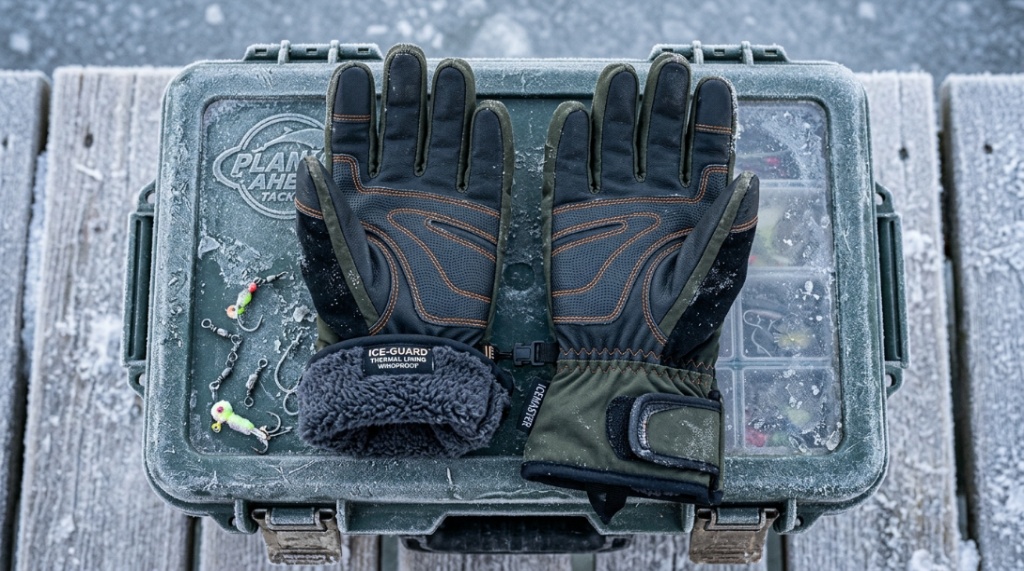
Buying fishing gloves that work in rain, snow, and cold simultaneously requires three non-negotiable features: a breathable waterproof membrane (not just DWR coating), sealed seams that block water at stitch points, and synthetic insulation that maintains warmth when damp. Neoprene convertible gloves provide the most reliable single-purchase solution. A liner-plus-shell layering system provides the most adaptable all-day solution. Budget $40–$80 for genuine multi-condition capability and your hands stay warm and dry regardless of what the weather throws at your fishing trip.
What conditions challenge your fishing gloves most — sustained rain, wet snow, or extreme cold? Share your toughest weather fishing story below.
When battling harsh weather, your gear needs to protect you from more than just the temperature. Dealing with blinding water glare while fishing can be just as challenging as managing freezing hands, making proper eye protection and high-grip, weatherproof gloves essential. Investing in the right pair ensures you maintain a tight grip on your rod and reel, even when your hands are wet and the conditions are unforgiving.
Frequently Asked Questions
Can one pair of gloves really handle rain, snow, and cold?
Yes — 3mm neoprene convertible gloves handle all three conditions in a single product because neoprene is naturally waterproof, insulating when wet, and windproof. They are not the absolute best at any single condition but perform adequately across all three. For anglers who face unpredictable weather, this versatility outweighs single-condition specialization.
How do I prevent my waterproof gloves from getting clammy inside?
Choose gloves with breathability ratings above 10,000g/m²/24hr. Avoid fully sealed rubber or PVC gloves that trap all moisture. Use thin moisture-wicking liner gloves underneath. Remove gloves periodically to air out. Accept that some internal moisture is inevitable during active fishing — breathable membranes minimize it but cannot eliminate it entirely.
Are Gore-Tex fishing gloves worth the premium?
For anglers fishing 30+ days per year in wet conditions, yes — Gore-Tex maintains waterproofing for 3–5 seasons while cheaper membranes degrade in 1–2 seasons. For occasional cold-weather anglers (under 15 trips/year), mid-range membranes at $40–$60 provide adequate performance at better value.
Should I bring backup gloves on cold fishing trips?
Always. Even quality gloves can get soaked internally from fish handling, unexpected submersion, or accumulated perspiration during long days. A dry backup pair in a sealed bag transforms a miserable final two hours into comfortable fishing. Lightweight fleece gloves as emergency backup weigh ounces and save trips.
How do I maintain waterproof fishing gloves between seasons?
Rinse with fresh water after saltwater use. Dry completely inside-out before storage. Reapply DWR spray every 10–15 uses to maintain outer water beading. Store flat (not crumpled) in a dry location. Inspect seam tape annually for lifting or separation. Well-maintained waterproof gloves last 3–5 seasons; neglected ones fail in 1–2.
Do thicker gloves always mean warmer gloves?
No — insulation quality matters more than thickness. 100g of PrimaLoft provides equal warmth to 150g of cheap polyester fill in a thinner, more dexterous package. Additionally, too-thick gloves restrict blood flow through tight finger channels, actually reducing warmth despite more material. Properly fitted moderate insulation outperforms overstuffed thick gloves.