
You just finished a long session. Your arms are shot. The last thing you want is to lean your board against a dusty wall, risking a ding or a warp. We have all been there, staring at a pile of expensive foam that needs proper care. The problem is that wall mounts require drilling, and leaning boards against furniture invites accidents. You need a dedicated, sturdy solution that stands on its own, protects your gear, and fits your space without a toolbox. This guide walks you through everything you must know to choose the best freestanding surfboard racks for your home, garage, or shop, so your boards stay safe and your space stays organized.
What Exactly Makes a Freestanding Rack Different From Wall Mounts?
A freestanding surfboard rack is a self-supporting unit that sits on the floor without needing to be attached to a wall or ceiling. Unlike fixed mounts, it offers portability and flexibility, allowing you to move your storage solution wherever it fits best.
Defining the Core Design
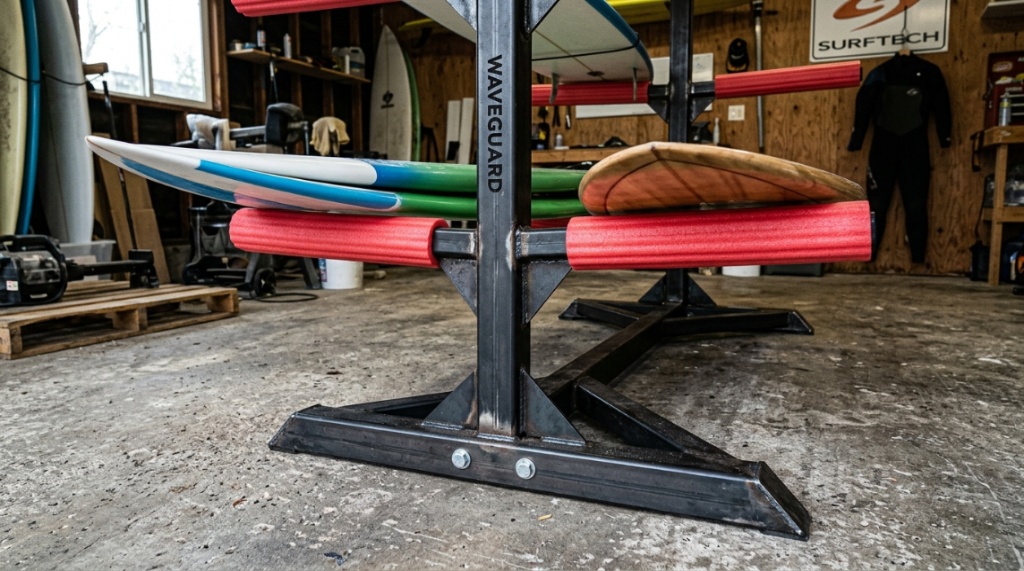
These racks typically use a base frame with vertical arms or horizontal slots. The weight of the boards and the rack itself keeps it stable. High-end models use steel tubing or heavy-duty aluminum, while budget options might use molded plastic or wood. The key is the footprint and the padding.
Key Differences in Stability
Wall mounts share the load with the structure of your building. Freestanding racks must rely entirely on their own base and balance. Look for a wide base or weighted feet. A rack that wobbles when you place a board on it is a hazard. The best designs use a low center of gravity to prevent tipping, even when fully loaded.
When Portability Matters Most
If you move frequently, live in a rental, or want to rearrange your garage layout, freestanding racks are the superior choice. You can take them apart and reassemble them quickly. You do not have to patch holes in drywall or worry about finding studs.
How Many Surfboards Do You Need to Store?
Your storage capacity is the single most important factor in narrowing down your choices. A rack designed for two boards is very different from one meant for eight or more. Overloading a small rack leads to pressure dings and instability.
Counting Your Quiver Accurately
Start with your current boards. Then, add one or two slots for future growth. Surfers rarely own fewer boards than they think they do. Consider shortboards, longboards, and funboards. A longboard requires more space between the arms than a shortboard.
Understanding Weight Distribution
A rack holding four heavy longboards needs a stronger frame than one holding four lightweight shortboards. Check the manufacturer’s weight limit per slot and total capacity. Distribute heavier boards on the bottom slots to keep the center of gravity low. This prevents the rack from tipping forward when you remove a top board.
The Problem with “One Size Fits All” Capacity Claims
Some racks advertise holding ten boards but only provide narrow slots that damage fins. Measure your widest board. Ensure the rack arms are wide enough to cradle the board without forcing it. A tight fit means the rack is too small for your equipment.
Which Materials Offer the Best Durability for Indoor and Outdoor Use?
Material choice determines how long your rack lasts and whether it can handle moisture, salt, and sun exposure. Cheap materials rust, rot, or crack under the weight of wet boards.
Steel vs. Aluminum vs. Plastic
Steel is the strongest and most stable, but it rusts if the coating chips. Powder-coated steel offers good protection for indoor use. Aluminum is lightweight and naturally rust-resistant, making it ideal for garages or covered patios. Heavy-duty plastic is affordable and rust-proof, but it can become brittle in direct sunlight over years of use.
The Importance of Padding and Cushioning
Bare metal or hard plastic crushes foam. Look for racks with thick, closed-cell foam padding on every contact point. This includes the arms, the base, and any stops. Closed-cell foam does not absorb water, so it will not grow mold or mildew.
Choosing Between Indoor and Outdoor Grades
If the rack lives outside under a roof, look for UV-resistant plastic or marine-grade aluminum. If it lives indoors, powder-coated steel or painted wood works well. Avoid raw wood for outdoor use because it warps and rots quickly. Avoid cheap chrome-plated steel for any environment near salt air.
How Should You Evaluate Stability and Safety Features?
Safety is non-negotiable. A falling surfboard can damage fins, crack a resin, or cause injury to a pet or child. You must check how the rack resists tipping and sliding.
Base Width and Weighted Feet
A narrow base is unstable. Measure the footprint. The base should be at least as wide as the rack is tall for proper stability. Some racks come with hollow feet that you can fill with sand or water for extra ballast. This is an excellent feature for top-heavy racks holding longboards.
Anti-Slip and Floor Protection Features
Rubber feet or pads prevent the rack from sliding on smooth concrete or tile floors. They also protect your floor from scratches. Check that the feet are securely attached and thick enough to absorb minor bumps. A rack that slides when you lean a board into it is dangerous.
Testing the Rack Before You Buy
If possible, visit a shop and shake the display model. Load it with boards and see how it responds. Look for wobble in the joints. A good rack feels solid and planted. If the joints have play or the frame flexes, move on to a different model.
Can Freestanding Racks Handle Longboards and SUP Boards?
Yes, but you need a specific configuration. Longboards and Stand-Up Paddleboards (SUPs) are longer and heavier than shortboards. A standard rack designed for shortboards will not provide enough space or support.
Spacing Between Arms for Longboards
The distance between the arm supports must be wide enough to cradle the board without pinching. For boards over 8 feet, look for a rack with adjustable arm positions or extra-wide spacing. A general rule is that the arms should support the board roughly one-third of the way from each end.
Weight Capacity for Heavy Boards
A foam longboard or a hard SUP can weigh 20 to 30 pounds. Multiply that by the number of boards you store. Ensure the rack’s total weight rating covers at least 1.5 times your expected load. Overloading stresses the welds and joints.
Storing Multiple Longboards Without Contact
Longboards need vertical or horizontal separation to prevent fins from hitting the rails of the board next to them. Look for racks with individual slots or staggered arms. Stacking longboards flat on top of each other damages the deck and bottom foam over time.
How Do You Assemble and Maintain a Freestanding Rack for Longevity?
Proper assembly and routine maintenance are just as important as the rack’s design. Skipping steps leads to instability and premature wear.
Step-by-Step Assembly Tips
- Lay out all parts and confirm you have the correct hardware.
- Hand-tighten all bolts first to align the frame, then tighten fully with a wrench.
- Do not overtighten plastic parts to avoid cracking them.
- Check that all padded arms are oriented correctly so the padding faces the board.
- Place the rack in its final location before loading boards.
Routine Inspection Checklist
Every three months, inspect your rack for loose bolts, cracking foam, and rust spots. Tighten any loose connections immediately. Replace foam padding that has torn or flattened. Wipe down metal parts with a dry cloth to remove moisture.
Preventing Rust and Corrosion
If you live near the coast, salt air accelerates corrosion. Apply a light coating of protective wax or spray lubricant to metal joints. Keep the rack out of direct rain. If it gets wet, dry it thoroughly. A little preventive care adds years to the rack’s life.
Which Features Separate Budget Racks from Premium Models?
Not all racks are created equal. Understanding the trade-offs between cost and quality helps you spend your money wisely. You do not always need the most expensive option, but you should avoid the cheapest.
Comparing Construction Quality
| Feature | Budget Rack | Premium Rack |
|---|---|---|
| Material | Thin plastic or lightweight steel | Heavy-gauge steel or aluminum |
| Padding | Open-cell foam or thin rubber | Thick closed-cell foam |
| Assembly | Requires tools, instructions unclear | Tool-less or easy assembly |
| Stability | Narrow base, may wobble | Wide base, weighted feet, solid |
| Warranty | 30 days or none | 1–5 years |
When You Can Choose a Budget Option
If you store only two lightweight shortboards indoors and you have a stable carpeted floor, a basic plastic or thin steel rack will work fine. You do not need industrial strength for minimal use.
When You Must Invest in Premium
For longboards, SUPs, or any board stored in a garage or workshop, invest in a premium model. The extra cost pays for better stability, better padding, and resistance to rust. A premium rack holds its value and protects your expensive boards from damage. When evaluating options for your home display, stability is critical not just for organizing your quiver, but also for maintaining your equipment. If you frequently handle dings or maintenance tasks, you can improve repair quality with a proper surfboard stand to secure your board safely while working on it.
How Does the Rack Fit Into Your Home or Garage Layout?
Measure your space before you buy. A rack that is too wide for your hallway or too tall for your garage door opening is useless. Consider both the physical footprint and the clearance needed to load boards.
Measuring for Clearance and Access
Allow at least 18 inches of space in front of the rack to safely slide boards in and out. For vertical racks, measure the height of the rack plus the length of your longest board. Ensure the ceiling is high enough. For horizontal racks, measure the width of the longest board plus the rack frame.
Integrating with Existing Storage Furniture
Freestanding racks work well next to shelves, cabinets, or a workbench. They should not block walkways or doors. Place the rack in a low-traffic area to reduce the chance of accidental bumps. Avoid placing it near a heat source like a water heater or furnace.
Wall Proximity and Airflow
Keep the rack at least 4 inches away from walls to allow air to circulate around the boards. This prevents mold and mildew growth. Good airflow is especially important if you store wet boards. A wall-hugging rack traps moisture.
Can You Build Your Own Freestanding Rack versus Buying One?
Building a rack is possible, but it requires specific skills and materials. Most surfers are better off buying a purpose-built product. However, there are pros and cons to each approach.
Pros and Cons of DIY Racks
Building your own rack can save money and allow for custom dimensions. However, DIY racks often lack proper padding, have unstable joints, and may not handle weight evenly. A poorly built DIY rack can damage your boards or tip over.
Pros and Cons of Commercial Racks
Commercial racks are engineered for the specific purpose of holding surfboards. They use correct materials, proper padding, and tested stability. The cost is higher than DIY, but the peace of mind and safety are worth it. You also get a warranty.
Finding the Best Value for Your Specific Needs
For most people, a commercial rack from a reputable brand offers the best value. You avoid the risk of damaging your boards. If you have a very unusual space or an extremely large quiver, a custom DIY solution might make sense, but only if you have woodworking or metalworking experience.
What Are the Best Brands Known for Quality Freestanding Racks?
Several brands have established reputations for making durable, reliable racks. Sticking with known brands reduces the risk of buying a flimsy product. While specific models change, the brand values remain consistent.
Brands Focused on Home Garage Storage
Companies like Surf Shack and Board Buckle specialize in home and garage storage solutions. They offer multiple sizes, color options, and heavy-duty construction. Their racks are well-reviewed for stability and ease of assembly.
Brands Focused on Commercial and Shop Use
For shops or rental fleets, brands like Ultimate Surfboard Rack build industrial-grade units. These racks handle high turnover and heavy loads. They are more expensive but built to last for decades.
Evaluating Customer Reviews and Warranties
Read recent customer reviews on multiple platforms. Look for comments about stability, padding quality, and customer service. A long warranty (5 years or more) is a strong indicator of a company’s confidence in its product. Avoid brands with numerous reports of broken parts or rust.
After evaluating your space, quiver size, and budget, you will find the perfect match. For a curated selection of high-value models that balance cost and performance, check out the best freestanding surfboard racks currently available. This list focuses on reliable, affordable units that protect your gear without breaking the bank.
Frequently Asked Questions
Can I store wet surfboards on a freestanding rack?
Yes, but you need adequate airflow. Choose a rack with open-frame design or wide spacing between boards. Never store wet boards in a closed, non-ventilated space. Wipe down the rack arms after each use to prevent moisture buildup.
What is the safest way to load a board onto a freestanding rack?
Always load the bottom slots first. This keeps the center of gravity low. Slide the board in nose-first or tail-first, keeping it level. Do not drop or force the board into the arms. Gently place it onto the padding.
How do I protect my floor from the rack feet?
Most racks come with rubber feet. If yours does not, attach adhesive felt pads or rubber caps. This prevents scratches on wood, tile, or laminate floors. It also helps prevent the rack from sliding.
Can I use a freestanding rack to store surfboards in a shed?
Yes, as long as the shed is dry and temperature-stable. Avoid storing boards in sheds that get very hot or very cold for long periods. The rack works the same way in a shed as in a garage.
How much weight can a typical freestanding rack hold?
This varies by model. A standard home rack holds between 50 and 80 pounds total. A heavy-duty rack can hold up to 200 pounds. Always check the manufacturer’s specifications before loading.
Are freestanding racks suitable for apartments?
Yes. They are ideal for apartments because they do not require wall mounting. Choose a compact, narrow model that fits in a corner or closet. Make sure the base is stable on carpet or hard floors.
How often should I tighten the bolts on my surfboard rack?
Check the bolts every three months. Vibration from loading and unloading can loosen them over time. Tighten them with a wrench, but do not overtighten. Apply a drop of thread-locking glue if bolts keep coming loose.